
Israel's Supreme Court Bans Real-Time Vote Data Sharing by Parties
Translated & summarized from Ynet by baba
Israel's Supreme Court has banned political parties from receiving real-time voter turnout data from polling stations. The ruling, issued on Thursday, prevents observers from transmitting such information to their parties during election day. The court cited concerns about election integrity and preventing polling stations from becoming party campaign tools. The decision was welcomed by the Israeli Democracy Watch organization.
The story in 5 lines · by baba
- Israel's Supreme Court banned parties from receiving real-time voter turnout data from polling stations.
- The ruling prevents election observers from transmitting voter counts to their parties on election day.
- Justices Khaled Kabub and Ruth Ronen delivered the majority decision, with Justice David Mintz dissenting.
- The case followed a petition by Israeli Democracy Watch against the Central Elections Committee.
- The court cited concerns about election integrity and preventing polling stations from becoming party campaign tools.
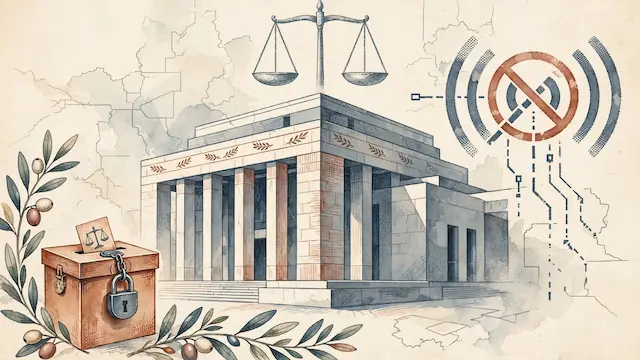
Israel's Supreme Court on Thursday prohibited political parties from receiving real-time data on voter turnout directly from polling stations. The ruling, delivered by Justices Khaled Kabub and Ruth Ronen with Justice David Mintz dissenting, prevents election committee members and observers from counting and transmitting the number of voters at specific polling stations to their parties during election day via digital means.
The decision stemmed from a petition filed by the Israeli Democracy Watch organization against a decision by Din Livneh, the acting Director General of the Central Elections Committee. During a hearing, Justices Kabub and Ronen questioned the legality of allowing such real-time data transmission, expressing concern it might violate a previous court ruling. Livneh had previously clarified that parties could share numerical data on turnout rates, but not personal information about voters. The Supreme Court's final decision now bans this practice entirely.
Israeli Democracy Watch welcomed the ruling, stating that election officials serve a public duty and are not operational arms of party headquarters. They argued the decision upholds the necessary separation between election administration and campaign management, preventing polling stations from becoming real-time party information sources and reinforcing election integrity.
Justice Kabub had previously warned of "breaking all boundaries," citing the potential for thousands of reports daily compared to the previous system of four updates from the Central Elections Committee. Attorneys representing the state and the committee argued the data sharing was intended for election oversight and voter encouragement, suggesting it could help identify issues like road blockages preventing voters from reaching polls. However, the justices were unconvinced, with Justice Ronen questioning why parties couldn't simply contact election authorities or the police instead.
Justice Mintz, in his minority opinion, highlighted the political motivation behind the data sharing, suggesting it would be used to mobilize voters in areas where a party expects high support. The state's attorney acknowledged voter mobilization as a legitimate purpose for data transmission.
Mentioned
The same event, reported separately by each outlet. Open a few to compare what different newsrooms emphasize — and what they leave out.
Centre 2Right 1Haredi 2Arab 2Other 1







Not the same event — other stories that share this one’s people, places, or theme: background, reactions, and follow-ups.


