
High Pollution Levels Found in Northern Israel Streams
Translated & summarized from Ministry of Health by baba
Health and Environmental Protection ministries reported high fecal coliform bacteria levels in northern Israeli streams following water sampling on October 4-5, 2026. Readings in the Jordan River reached 2,000 units, exceeding the Health Ministry's guideline of 400. Entry into affected streams, including the Jordan, Hasbani, and Banias, is now considered dangerous, with no known pollution source identified.
The story in 5 lines · by baba
- High fecal coliform bacteria levels were detected in northern Israeli streams on October 4-5, 2026.
- Jordan River readings reached 2,000 units, significantly exceeding the Health Ministry's recommended limit of 400.
- Entry into affected streams, including the Jordan, Hasbani, and Banias, is now considered dangerous.
- The Ministry of Environmental Protection has not identified a specific source for the pollution.
- Health and Environmental ministries will continue monitoring the water quality.
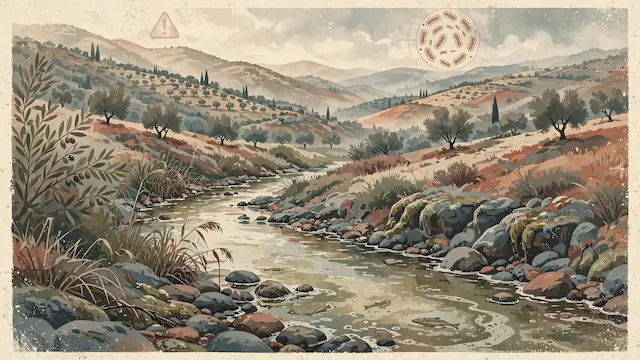
The Ministry of Health and the Ministry of Environmental Protection have alerted the public and local authorities to significantly elevated levels of fecal coliform bacteria in several streams in northern Israel. Water samples collected on October 4 and 5, 2026, revealed bacterial counts far exceeding the Health Ministry's recommendation of 400 fecal coliform per 100 ml, indicating substantial pollution.
Among the affected waterways are the Banias River (830 units at the Kfar Sald bridge), the Hasbani River (ranging from 570 to 800 units), and the Jordan River, where levels reached as high as 2,000 units at the Lahavot HaBashan bridge. Other streams with high readings include the Meshushim Pool (2,100 units), Gilabon (1,900 units), and Tzalmon (1,040 units at the Haruv Pool).
Consequently, entry into these streams is considered potentially dangerous until the water quality improves and stabilizes. The affected sections include the Banias from Kfar Sald bridge, the Hasbani from the Roman bridge to the confluence promenade, the Jordan from Joseph's bridge to Arik bridge, and the Meshushim Pool, Gilabon, Zaki, Yehudiya, Tzalmon at Haruv Pool, and Ein Hardalit in the Kaziv stream.
The Ministry of Environmental Protection has stated that no known source of pollution has been identified. Routine sampling is conducted bi-weekly by the Israel Nature and Parks Authority at fixed points across northern streams in the Upper Galilee, Golan Heights, and Western Galilee. The ministries will continue monitoring and will provide updates as necessary.
Mentioned
The same event, reported separately by each outlet. Open a few to compare what different newsrooms emphasize — and what they leave out.
Centre 2Right 2Haredi 1Arab 2








Not the same event — other stories that share this one’s people, places, or theme: background, reactions, and follow-ups.
