Health Ministry Warns of Dangerous Pollution in Northern Streams
Translated & summarized from Kikar HaShabbat by baba
Israel's Ministry of Health and Ministry of Environmental Protection have warned against entering several northern streams due to dangerous levels of fecal coliform bacteria, with readings exceeding 2,000 in some locations. The directive, issued after water sampling on October 4-5, 2026, advises caution for travelers, particularly yeshiva students visiting during the "bein hazmanim" period. No specific pollution source has been identified by environmental officials.
The story in 5 lines · by baba
- Health Ministry warns of dangerous pollution in northern Israeli streams.
- Water samples from October 4-5, 2026, showed high fecal coliform bacteria levels.
- Specific streams like Meshushim Pool and Jordan River sections are affected.
- No known source of the pollution has been identified.
- Public is advised against entering affected streams until results stabilize.
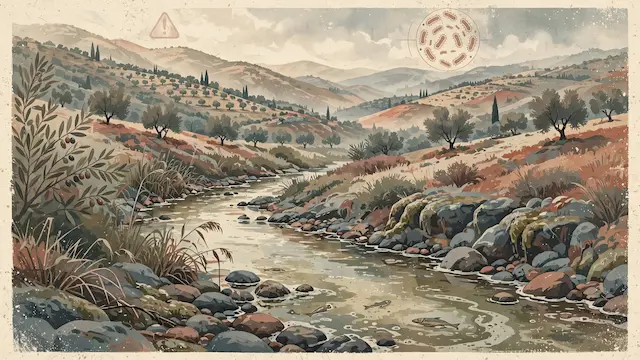
Israel's Ministry of Health and the Ministry of Environmental Protection have issued an unusual directive warning the public that entering several streams in northern Israel may be dangerous due to high levels of fecal coliform bacteria. The warning comes as the "bein hazmanim" holiday period, popular for yeshiva students to visit northern streams, is nearing its end. Water sampling conducted on October 4 and 5, 2026, revealed bacterial counts significantly exceeding the Health Ministry's recommended limit of 400 fecal coliform per 100 ml in multiple locations.
Specific readings included 2,100 in the Meshushim Pool, 2,000 at the Lahavot HaBashan bridge on the Jordan River, and 1,900 in the Gilabon stream. The directive advises against entering the Banias stream from the Kfar Eld bridge, the Hatzbani from the Roman bridge to the Jordan River confluence, the Jordan River from Yusuf bridge to Arik bridge, Meshushim Pool, Gilabon, Zachi, Yehudiya, Tsalmon at Haruv Pool, and Kaziv at Ein Hardalit.
The Ministry of Environmental Protection stated that no known source of pollution has been identified for these streams. Routine water sampling in northern streams is typically conducted bi-weekly by Nature and Parks Authority inspectors at fixed points representing different sections of the waterways.
Mentioned