
Second suspected Ebola case in Israel after traveler from Congo admitted to Sheba
Translated & summarized from Ynet by baba
Israel reported a second suspected Ebola case when a man who returned from the Democratic Republic of Congo was isolated at Sheba Medical Center. Health officials said neither case is confirmed yet, while entry restrictions and contact tracing are underway.
The story in 5 lines · by baba
- Second suspected Ebola case in Israel was admitted to Sheba after returning from Congo.
- The first suspected case was reported two days earlier at Rambam in Haifa.
- Both patients are Israeli and still await test results.
- Israel has temporarily barred non-Israeli arrivals from Congo, Uganda and South Sudan.
- Health officials are tracing contacts and urging symptomatic returnees to isolate and call 5400*.
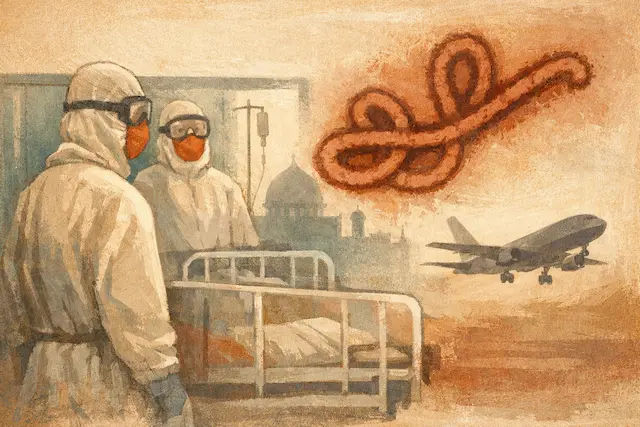
A second Israeli man suspected of having Ebola was admitted to Sheba Medical Center at Tel Hashomer, just two days after another suspected case was hospitalized at Rambam in Haifa. The Health Ministry said the man arrived from the Democratic Republic of Congo two days ago and sought care after developing fever, headache and diarrhea. He is being treated in isolation, and test results are expected in the coming days. Sheba is one of the hospitals designated to receive such suspected cases.
This is the second suspected Ebola case reported in Israel within 48 hours. On Friday, the ministry announced the first case, also an Israeli who had returned from Congo and developed fever and headache. That patient was isolated at Rambam. In both cases, officials stress that these are only suspicions so far and no confirmed Ebola case has been diagnosed in Israel.
The ministry is carrying out separate epidemiological investigations for each patient to identify possible contacts and determine whether there is any link between the two cases. After the investigations are completed, people found to be relevant will be contacted directly based on risk assessment. Anyone who does not receive a direct call from the Health Ministry does not need to take any action at this stage.
Authorities have also tightened entry rules. The Population and Immigration Authority has temporarily blocked the entry of non-Israelis arriving from Congo, Uganda and South Sudan. The measure, requested by the Health Ministry, has been in place since June 9 and may be updated as the situation develops. The ministry continues to urge Israelis to avoid nonessential travel to affected areas and says travelers returning from Congo or Uganda who develop symptoms within 21 days should stay home, avoid contact with others and call the ministry hotline at 5400*.
Ebola is a severe viral disease spread through direct contact with body fluids or contaminated objects, not through the air. Experts say the current outbreak in eastern Congo, caused by the Bundibugyo strain, is not under control, with 956 confirmed cases and 247 deaths reported there, mostly in Ituri. The WHO has declared it a public health emergency of international concern.
Mentioned
The same event, reported separately by each outlet. Open a few to compare what different newsrooms emphasize — and what they leave out.
Centre 6Right 2Haredi 1Other 1









