
Israel Health Ministry Says Ebola Poses No Risk of Wide Outbreak
Translated & summarized from Walla by baba
Israel’s Health Ministry said Sunday it is not imposing broad entry or quarantine restrictions over Ebola and sees no realistic risk of a wide outbreak in Israel. Officials said two suspected cases are being handled at Sheba Medical Center, while the ministry continues to monitor the outbreak in Africa and international guidance.
The story in 5 lines · by baba
- Israel will not block Israelis arriving from Ebola-affected countries.
- Officials say the risk of a wide outbreak in Israel is very low.
- Two suspected Ebola cases in Israel are being treated at Sheba Medical Center.
- The ministry says Ebola spreads by direct contact, not through air.
- Testing is reliable only about 72 hours after symptoms begin.
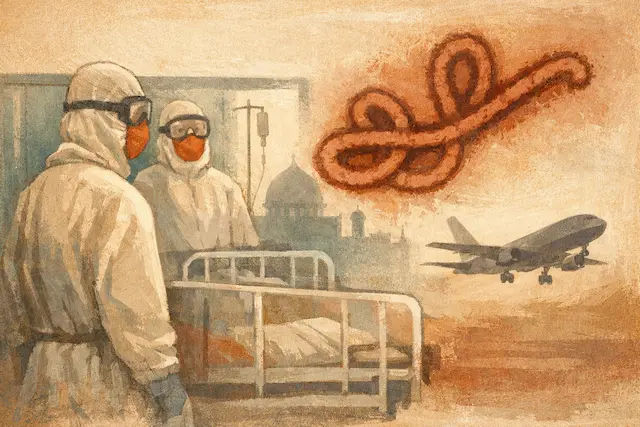
Israel’s Health Ministry said Sunday that it sees no danger of a broad Ebola outbreak in Israel and will not block Israelis from entering the country from places where Ebola is circulating. Prof. Siegal Sadetzky, head of public health at the ministry, said in a special briefing that the chance of an Ebola patient reaching Israel had so far been “almost zero,” and that even when suspicious cases appeared abroad, authorities isolated them in time and no outbreaks followed.
Sadetzky said the ministry has been closely monitoring developments in Africa since the latest outbreak was declared, and moved immediately after the World Health Organization’s announcement. She said officials are studying risk assessments and guidance from disease-control centers in Europe and the United States, as well as policies in other countries. She noted that in May a wide outbreak was reported in three African provinces, mainly in Congo and Uganda, and said there is some spillover between countries, with concern it could become a broader global event.
The ministry said there are currently no additional suspected cases in Israel beyond the two cases already reported. Sadetzky said, “We have no current additional suspects.” Dr. Sigal Libran Taub, head of the medical administration division, said both patients developed similar symptoms after being in areas with Ebola exposure, and are being treated according to protocol while remaining in close contact with medical teams. Officials declined to provide further details because of medical confidentiality.
Libran Taub said the suspicion in both cases is similar because both people had been in a geographic area with Ebola exposure and developed fever, but the coincidence is accidental. She said doctors often see fever patients arriving from various parts of the world, and most are eventually diagnosed with more common illnesses. She added that Ebola tests are not immediate and become reliable only about 72 hours after symptoms begin. The ministry said the patients were transferred to Sheba Medical Center, which has the infrastructure for treatment and isolation if needed, and reiterated that Ebola is not airborne but spreads through direct contact with body fluids, making the risk of a wide outbreak in Israel very low.
Mentioned
The same event, reported separately by each outlet. Open a few to compare what different newsrooms emphasize — and what they leave out.
Centre 6Right 2Haredi 1Other 1










Not the same event — other stories that share this one’s people, places, or theme: background, reactions, and follow-ups.
