
Five Israeli hospitals designated to receive possible Ebola patients
Translated & summarized from Behadrei Haredim by baba
Israel’s Health Ministry has designated five hospitals and trained emergency services to handle possible Ebola cases after two Israelis were suspected of infection. The two patients are isolated in Rambam and Sheba, while officials say the country currently has no other suspected cases and is using border checks and risk assessments to prevent spread.
The story in 5 lines · by baba
- Five hospitals were designated as Ebola intake sites with separate treatment areas.
- Two suspected Ebola patients are isolated in Rambam and Sheba.
- Israel is not requiring quarantine for returning Israelis from outbreak countries.
- Foreign nationals from Congo and Uganda are barred, with limited exceptions.
- WHO declared a health emergency after outbreaks in Congo and Uganda.
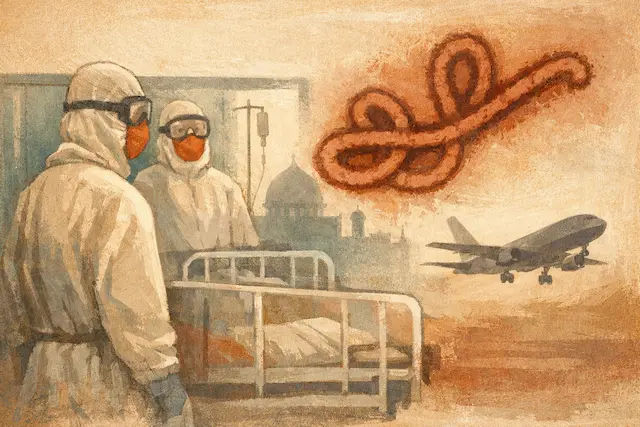
Following the confirmation that two Israelis have been suspected of Ebola infection, Israel’s Health Ministry has designated five hospitals as dedicated intake sites for Ebola patients, with separate treatment areas: Ichilov, Sheba, Soroka, Hadassah Ein Kerem and Rambam. The ministry also trained Magen David Adom and the Health Ministry hotline, Kol HaBriut, to question and identify people with Ebola symptoms, and to decide how patients should be transported from home to hospitals or between medical centers.
So far, two suspected cases have been identified and are hospitalized under full isolation, one at Rambam and one at Sheba, according to ministry procedures. Officials refused to discuss their medical condition, saying, “We insist on preserving the patients’ medical confidentiality, no information will be given beyond what we have provided.” The suspicion stems from the symptoms they developed and the geographic region from which they arrived in Israel. A definitive Ebola rule-out requires waiting 72 hours after testing for a reliable result.
The ministry said it will not require quarantine for Israelis returning from outbreak countries, despite recommending they avoid visiting them. Foreign nationals from Congo and Uganda have been barred from entering Israel, except for exceptional requests that undergo an epidemiological review. At present, officials say there is no suspicion of additional cases in Israel beyond the two patients in Sheba and Rambam, and no need for further isolation.
Health authorities are carrying out risk assessments for Israel, border monitoring, and guidance for people returning from affected countries on how to behave and what to do if symptoms appear. The ministry says that returning Israelis from Africa, including high-risk areas, are generally assumed to have malaria or another illness rather than Ebola, even if they have symptoms, but they are still investigated to prevent any case from entering Israel and to ensure proper treatment if needed. In May, Ebola outbreaks were reported in three districts in northeastern Democratic Republic of Congo and in Uganda’s capital. The World Health Organization declared a public health emergency, and global concern remains high because the Congo outbreak is not yet contained. Congo has reported more than 900 cases with 26% mortality, though the figures are not fully verified, while Uganda has 19 cases, 15 imported from Congo and 4 acquired locally, with the disease there under control. Ebola’s incubation period is two days to three weeks, it is transmitted through direct contact or contaminated body fluids on surfaces and objects, and only symptomatic patients are contagious.
Mentioned
The same event, reported separately by each outlet. Open a few to compare what different newsrooms emphasize — and what they leave out.
Centre 6Right 2Haredi 1Other 1









