
Israel on Alert After Two Ebola Suspicions in Returning Travelers
Translated & summarized from Now 14 by baba
Israel’s Health Ministry is treating two suspected Ebola cases in returning travelers from Congo, one at Sheba and one at Rambam. Officials say the risk of local spread is almost zero, while hospitals, Magen David Adom, and border procedures have been tightened because of the outbreak in Africa.
The story in 5 lines · by baba
- Two Congo returnees are isolated in Sheba and Rambam with suspected Ebola.
- Officials say the cases are coincidental and local spread is almost impossible.
- Final test results require at least 72 hours.
- Only five Israeli hospitals may treat suspected or confirmed Ebola patients.
- Magen David Adom and hospitals have updated emergency and isolation procedures.
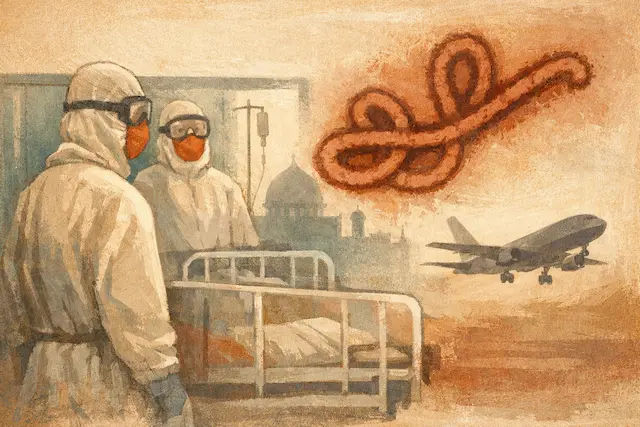
Israel’s Health Ministry has put the system on alert after two patients who recently returned from the Democratic Republic of Congo were hospitalized separately under suspicion of Ebola, one at Sheba Medical Center in Tel Hashomer and the other at Rambam in Haifa. Officials stressed that the timing was coincidental, not evidence of local transmission, and said the chance of a community outbreak outside Africa is “almost zero.”
The ministry said specific tests for Ebola have already been taken, but final exclusion of the virus requires at least 72 hours. For now, both cases remain only suspicions, and no identifying details will be released because of the patients’ medical confidentiality rights. Health officials also noted that the two arrivals on consecutive days fit statistical expectations based on travel volume from risk areas.
The concern comes amid what the ministry described as a worrying Ebola wave in Africa, with more than 900 reported cases and a fatality rate of about 26%, though not all cases are believed to be known to local authorities. Globally, the ministry said there is fear of spillover beyond the continent, but historically no Ebola case outside Africa has led to local community spread. Ebola is a severe disease with mortality of 25% to 50%, an incubation period of two to 21 days, and contagion only after symptoms appear. It spreads through direct contact with blood or bodily fluids, or contaminated surfaces, and suspected fever cases among returning travelers are often malaria rather than Ebola.
In preparation, the Health Ministry sent detailed instructions to hospitals, held a training day for medical teams, and conducted site visits to refine procedures. Only five hospitals are authorized to receive suspected or confirmed Ebola patients, Sheba, Ichilov in Tel Aviv, Hadassah Ein Kerem in Jerusalem, Rambam, and Soroka in Beersheba. Magen David Adom also updated its protocols, retraining 101 dispatchers, tightening evacuation procedures, and reinforcing protective equipment rules. Israelis returning from Africa are not being barred, but foreign nationals arriving from specific outbreak areas are being denied entry except in exceptional, medically reviewed cases.
Mentioned
The same event, reported separately by each outlet. Open a few to compare what different newsrooms emphasize — and what they leave out.
Centre 6Right 2Haredi 1Other 1









