
Health Ministry Reports Suspected Second Ebola Case in Israel, Says No Cause for Panic
Translated & summarized from Walla by baba
Israel’s Health Ministry said two Ebola cases are under suspicion, one at Rambam and one transferred to Sheba, but neither has been confirmed. Officials said Ebola is not airborne, hospitals are prepared, and there is no reason for panic. The ministry also urged Israelis to avoid nonessential travel to affected areas in Africa.
The story in 5 lines · by baba
- Two Ebola cases are suspected in Israel, including patients at Rambam and Sheba.
- Officials say neither case is confirmed, and one test has already come back negative.
- Ebola spreads through body fluids, not through the air, Dr. Dana Dror said.
- Hospitals have isolation protocols, and MDA will transport suspected patients.
- The ministry advised against nonessential travel to outbreak areas in Uganda and Congo.
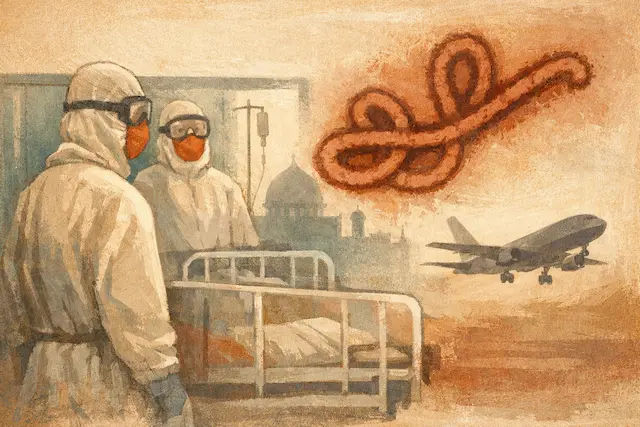
Israel’s Health Ministry said Sunday morning that two separate Ebola cases are suspected in the country. The second suspect was treated in isolation over the weekend, then transferred for further monitoring to Sheba Medical Center at Tel Hashomer. The first suspect is hospitalized in isolation at Rambam Medical Center.
Dr. Dana Dror, an internal medicine and infectious disease specialist with Clalit in Jerusalem, stressed that both cases remain only suspicions. “The first case has not yet been confirmed,” she said, noting that one test was negative and another result is still pending. She said Ebola is not airborne and spreads only through contact with the body fluids of an infected person, so “we do not expect a pandemic or broad spread like we saw with COVID.”
Dror said Israeli hospitals already have clear procedures for suspected Ebola patients. People returning from relevant African areas who develop symptoms should not go directly to a clinic or emergency room, but must first call the Health Ministry for instructions. If suspicion remains, the patient is taken by a protected team to a dedicated isolation room without contact with others. All general hospitals are instructed to identify and safely receive suspected cases in emergency departments, while the five high-readiness hospitals are Sheba, Ichilov, Hadassah Ein Kerem, Soroka and Rambam. Ambulance service MDA is the only body authorized to transport such patients.
She added that symptoms usually begin with fever, headache, muscle pain, weakness, and sometimes diarrhea and vomiting, and the early stage can resemble other viral illnesses. The incubation period is usually eight to 10 days, but can range from two days to three weeks. The ministry said there is an active outbreak in parts of Africa, especially Uganda and the Democratic Republic of Congo, and advised against nonessential travel there. Dror said, “There is no reason to panic” for anyone who was not in direct contact with a confirmed or suspected patient. The ministry said the first suspect, from northern Israel, returned three days earlier, had fever and headache, and is under epidemiological investigation, with final results expected within about 48 hours.
Mentioned
The same event, reported separately by each outlet. Open a few to compare what different newsrooms emphasize — and what they leave out.
Centre 6Right 2Haredi 1Other 1









