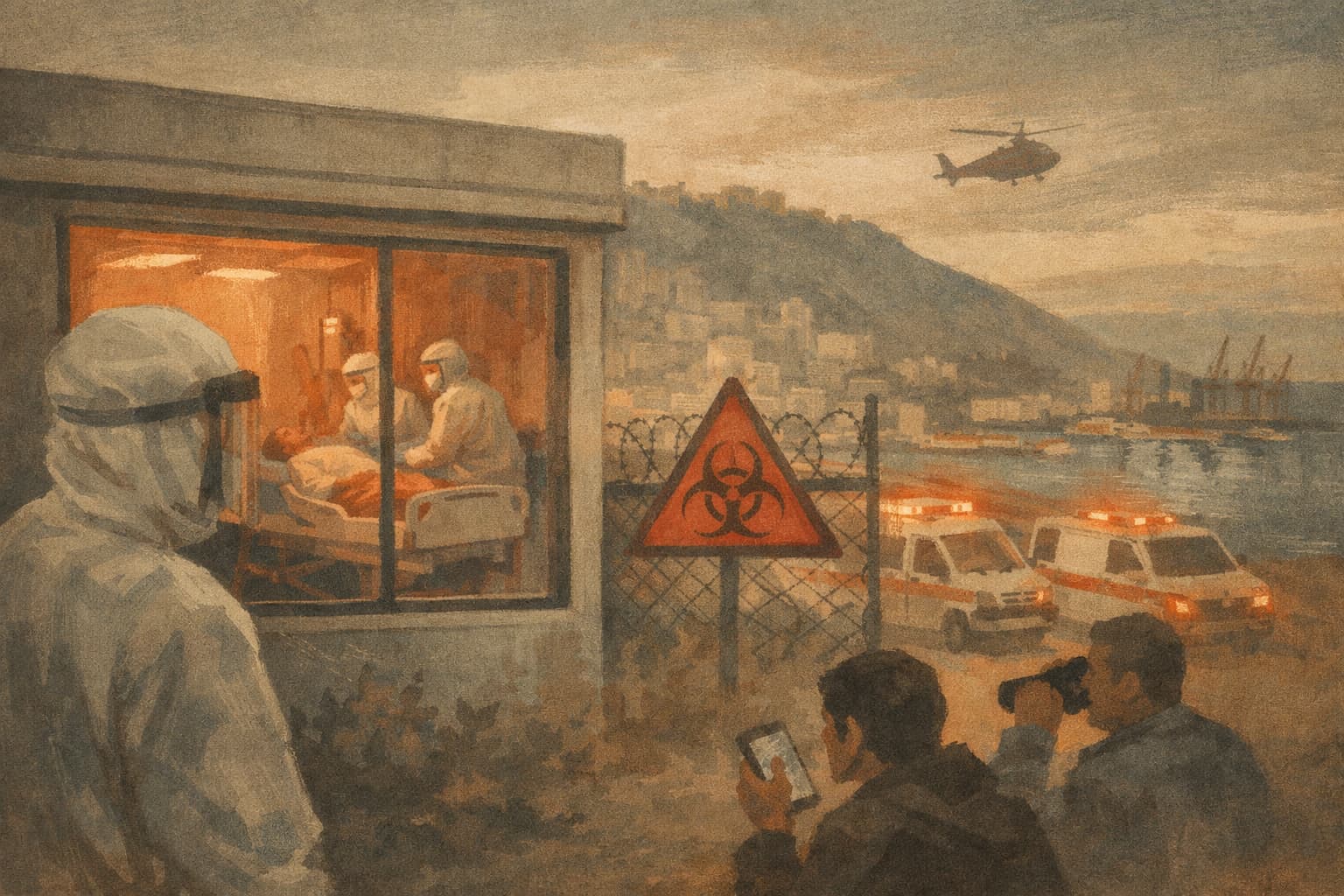
Israel on Alert After Ebola Suspect Is Isolated in Haifa

A person who returned from Congo three days ago was hospitalized at Rambam Medical Center in Haifa under strict isolation after developing symptoms consistent with Ebola, including fever and headache. The Health Ministry said the case is only a suspicion for now, tests are underway, and an epidemiological investigation has begun to identify the patient’s contacts.
The report comes amid renewed concern over Ebola after the World Health Organization declared a global emergency and daily case counts have continued to rise. The current outbreak is centered in a remote district of the Democratic Republic of Congo, but the virus has already spread to urban centers and other areas, raising fears of wider transmission beyond its original source.
Experts say Ebola outbreaks usually begin in East or West Africa. The leading theory is that the virus passes to humans through eating bat meat or exposure to bat secretions, such as during mining work, and then spreads person to person through direct contact with bodily fluids, including saliva, blood, semen, or stool. Initial symptoms can resemble malaria or typhoid, while severe cases involve bloody vomiting and diarrhea, shock, and organ failure. Death rates in developing countries range from 30% to 70%, depending on the quality of care.
The strain behind the current outbreak is called Bundibugyo. Unlike the better-known Zaire strain, there are no specific vaccines or drug treatments for it, though specialists say outbreaks can still be contained through strict contact tracing and isolation. Health experts are most concerned about the lack of targeted tools, spread in large cities, and infections among health workers, but they stress that the average risk in Israel is very low because Ebola is not airborne, especially in countries with advanced health systems. The Health Ministry said it held extensive preparedness meetings in recent weeks, is setting up information channels for returning travelers, will issue guidance to medical teams and hospitals in the coming days, has distributed protective equipment, and is planning dedicated treatment areas. It also advises against nonessential travel to affected areas, including Congo and Uganda.
The same event, reported separately by each outlet. Open a few to compare what different newsrooms emphasize — and what they leave out.








Not the same event — other stories that share this one’s people, places, or theme: background, reactions, and follow-ups.