
Israel Failing to Adopt Electric Cars, Energy Ministry Warns
Translated & summarized from N12 by baba
Israel's Ministry of Energy warns the country is failing to meet electric vehicle adoption targets due to policy failures, primarily blaming the Ministry of Finance for tax uncertainty and citing bureaucratic issues and reduced incentives. The current stagnation risks halving the economic benefits of the transition and prolonging air pollution.
The story in 5 lines · by baba
- Israel's electric vehicle adoption rate has dramatically declined.
- Ministry of Energy warns of failure to meet 2030 EV targets.
- Ministry blames Finance Ministry for tax uncertainty and bureaucracy.
- Economic benefits of EV transition could be halved.
- Current policy risks higher costs and continued air pollution.
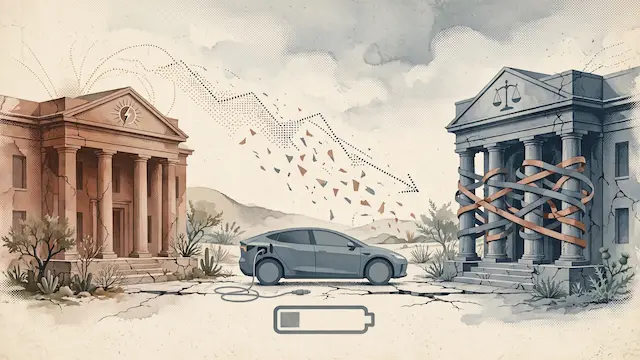
A new strategic report from Israel's Ministry of Energy warns that the country is failing to meet its goals for electric vehicle adoption, a situation described as "stagnation." The report highlights a dramatic decline in the share of electric vehicles among new car sales, dropping from 25% in 2024 to 12% in the first half of 2026. This trend puts the government's 2030 target of 90% electric new vehicles at risk, with the current trajectory only reaching 40% even with continued support.
The Ministry attributes the primary blame for this policy failure to the Ministry of Finance, citing uncertainty caused by delayed decisions on vehicle purchase taxes and potential road usage fees. This uncertainty deters consumers from purchasing electric cars. The report also notes that tax benefits for electric cars have been significantly reduced since the start of the war.
However, the Ministry of Energy is not absolved of responsibility. The report identifies bureaucratic hurdles in installing charging stations in shared residential buildings as a major obstacle, a problem the ministry has failed to resolve despite efforts with the Ministry of Justice. Furthermore, a proposed 100 million shekel budget for charging infrastructure was not allocated because a related road usage tax, which was intended to fund it, was not enacted. Ironically, the Ministry of Energy had expressed reservations about this very tax, fearing it would hinder electric vehicle adoption.
The continued lack of progress is projected to halve the economic benefit of transitioning to electric vehicles, reducing it from an estimated 20 billion shekels to under 10 billion shekels by 2030. For the average Israeli, this means higher costs for purchasing electric cars and continued exposure to air pollution from internal combustion engines.
The Ministry's report suggests a need for a complete reevaluation of the current strategy, hoping that the new findings and warnings will prompt a course correction. The professional staff at the Ministry of Energy acknowledge that their previous approach has not worked and hope that publishing this new model and warning will help steer Israel back onto the right path.
The same event, reported separately by each outlet. Open a few to compare what different newsrooms emphasize — and what they leave out.
Centre 4Other 1





Not the same event — other stories that share this one’s people, places, or theme: background, reactions, and follow-ups.
