
Police Commander Accuses IDF of Dispersing, Not Arresting, Settler Rioters
Translated & summarized from Walla by baba
A senior Israeli police commander criticized the IDF for dispersing, rather than arresting, Israeli settlers rioting in the Palestinian village of Qusra. The commander stated the IDF's failure to make arrests hinders police and Shin Bet investigations, despite efforts to improve inter-agency cooperation.
The story in 5 lines · by baba
- Police commander criticizes IDF's handling of settler riots.
- IDF allegedly disperses rioters instead of arresting them.
- Failure to arrest hinders police and Shin Bet investigations.
- Rioters injured a Palestinian woman in Qusra.
- Inter-agency security command center has been established.
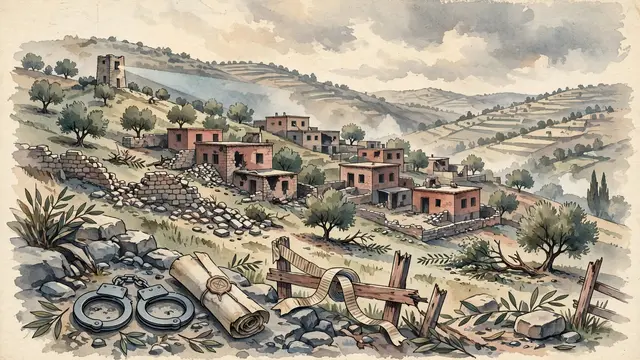
Moshe Pinchy, commander of the Judea and Samaria district of the Israel Police, has publicly criticized the Israel Defense Forces (IDF) for their handling of recent riots in the Palestinian village of Qusra. Speaking on Radio 103FM on Sunday, Pinchy stated that instead of arresting Israeli settlers involved in the disturbances, the IDF "disperse them." He emphasized that the responsibility for security in the area lies with the IDF, and their failure to apprehend rioters makes subsequent investigations by the police and the Shin Bet significantly more difficult.
Pinchy's comments came in response to claims that no arrests were made by the police following the riots. He acknowledged the gravity of the situation and the damage caused to Israel, its settlements, and society as a whole. Pinchy asserted that while he is not shirking responsibility, the IDF's role in apprehending perpetrators is crucial for effective law enforcement.
He also highlighted efforts to foster inter-agency cooperation in Judea and Samaria, noting the establishment of a joint command center involving all security bodies since he took office and the outbreak of recent events. This command center aims to centralize the authorities of all relevant organizations.
On Saturday, IDF and Border Police forces were deployed to Qusra, located in the Samaria region, after reports of Israeli rioters approaching the village. According to a joint statement from the IDF and Border Police, dozens of rioters were identified barricaded inside a Palestinian home, with Palestinian residents also present. Despite the large number of rioters, no arrests were reported. Police investigators were present at the scene, collecting evidence under IDF protection. Reports indicate that the rioters threw stones at Palestinians, injuring one woman.
Mentioned
The same event, reported separately by each outlet. Open a few to compare what different newsrooms emphasize — and what they leave out.
Left 1Centre 3




Not the same event — other stories that share this one’s people, places, or theme: background, reactions, and follow-ups.
