
IDF Kills Two Militants in Gaza as Pressure Mounts on Hezbollah in Lebanon
Translated & summarized from Maariv by baba
The Israeli Air Force killed two militants in Gaza preparing attacks, while Israel maintains pressure on Hezbollah in Lebanon amid U.S. calls to keep tensions low. Avi Ashkenazi explained Israel's targeted killing policy and highlighted Hezbollah's weakened position following recent strikes and ongoing negotiations.
The story in 6 lines · by baba
- IDF killed two militants in Gaza within an hour based on intelligence of planned attacks.
- Immediate threats allow IDF action without political approval; planned attacks require Prime Minister's consent.
- U.S. urges Israel to keep Gaza and Lebanon tensions low to focus on Iran.
- Hezbollah's tunnel destruction in Lebanon weakens its defenses and opens IDF maneuver options.
- Hezbollah was surprised by Hamas's October 7 attack and delayed joining the conflict.
- Israel balances military actions with diplomatic efforts under U.S. pressure.
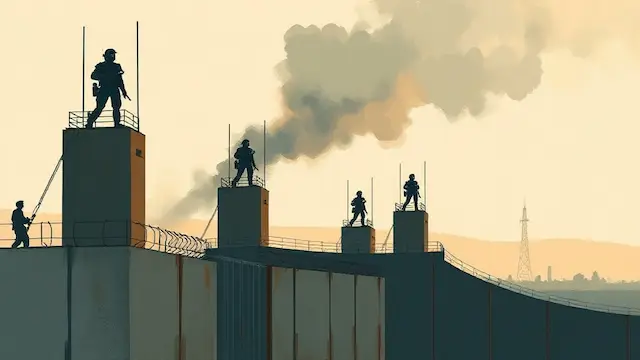
The Israeli Air Force eliminated two militants within an hour in the Gaza Strip, targeting a senior Hamas operative in the Nuseirat refugee camp and a Palestinian Islamic Jihad member in Khan Yunis. These strikes followed intelligence gathered by the Shin Bet and Military Intelligence, indicating the militants were preparing attacks against Israeli forces.
Avi Ashkenazi, speaking on 103FM, clarified Israel's policy on targeted killings in Gaza, distinguishing between immediate threats and planned future attacks. He explained that if a militant is caught in the act of planting explosives or approaching with weapons, the IDF can act without political approval. However, when intelligence suggests a militant is planning an attack, authorization from the Prime Minister is required before action is taken.
Ashkenazi also highlighted the influence of U.S. policy, noting Washington's preference for keeping tensions in Gaza and Lebanon low while focusing on Iran. He said the Americans have urged Israel to maintain "low flames" in these arenas to avoid opening new fronts, allowing diplomatic negotiations to proceed.
Regarding Hezbollah, Ashkenazi described the destruction of its tunnel network in southern Lebanon as a significant blow, potentially enabling the IDF greater operational freedom in the future. He noted Hezbollah is at a crossroads, facing limited support from Iran and the ongoing Israeli-Lebanese negotiations. Ashkenazi also remarked that Hezbollah was caught off guard by the October 7 attacks by Hamas, taking over 24 hours to join the conflict.
The developments underscore Israel's dual-front strategy of targeted military actions combined with diplomatic efforts to manage regional tensions, particularly amid U.S. pressure and the complex dynamics involving Hamas, Palestinian Islamic Jihad, and Hezbollah.
Mentioned
The same event, reported separately by each outlet. Open a few to compare what different newsrooms emphasize — and what they leave out.
Centre 3Haredi 1




Not the same event — other stories that share this one’s people, places, or theme: background, reactions, and follow-ups.
