
Ancient Tunnels and Byzantine Church Unveiled in Judean Lowlands
Translated & summarized from NEWSru Israel by baba
The Khirbet Burgin archaeological site in Israel's Judean Lowlands has been opened to the public after extensive restoration. The site features ancient underground hideouts used by Jewish rebels and the remains of a Byzantine church with mosaic floors. The project, a collaboration between the Israel Antiquities Authority and the Jewish National Fund, aimed to save the site from extensive looting and make it accessible for tourism and education.
The story in 5 lines · by baba
- Ancient tunnels used by Jewish rebels and a Byzantine church with mosaics are now open at Khirbet Burgin in the Judean Lowlands.
- The site, dating back to the Second Temple period, was a large Jewish village and later a Roman-era rebel stronghold.
- Extensive looting had damaged the site before joint efforts by the Israel Antiquities Authority and JNF halted the destruction.
- The opening is expected to boost rural tourism and provide educational opportunities about Jewish history and independence.
- Archaeological research revealed evidence of pigeon breeding, agriculture, and wine production in the ancient settlement.
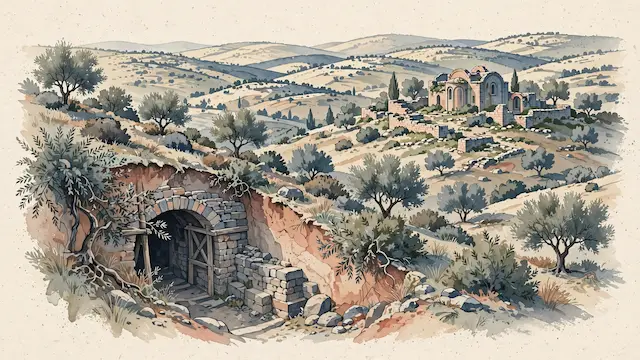
Extensive archaeological excavations, restoration, and development work has concluded at the Khirbet Burgin archaeological site in the Adulam Park, located in Israel's Judean Lowlands. The site, now open to the public, features ancient underground hideouts used by Jewish rebels nearly 2,000 years ago during their struggle against the Roman Empire, alongside the remains of a Byzantine church with colorful mosaic floors. The opening ceremony was attended by representatives from the Jewish National Fund (JNF), the Israel Antiquities Authority (IAA), and the Mateh Yehuda Regional Council.
Archaeological research at Khirbet Burgin, led by Dr. Amir Ganor, Alon Klein, and Dr. Petr Gendelman of the IAA, uncovered evidence of a settlement that existed from the Second Temple period through the Ottoman era. During the Second Temple period, it was a large Jewish village, possibly identifiable with Kfar Bish mentioned by Josephus Flavius. In the early Roman period, residents carved out an extensive network of underground passages and shelters for protection and resistance against the Romans. The settlement was destroyed during the Bar Kokhba revolt (132-135 CE).
Later, pagan inhabitants settled on the ruins, building above-ground structures and underground burial complexes with elaborate tombs. During the Byzantine period, a large church was constructed with decorative mosaic floors, and a monastic complex operated nearby. The site also yielded numerous columbaria for pigeon breeding and winepresses, indicating the importance of pigeon husbandry, agriculture, and wine production to the ancient settlement's economy.
Dr. Amir Ganor described Khirbet Burgin as the largest ancient settlement in the area, both in size and preserved structures. The site had suffered from extensive looting by "black archaeologists" for years. Joint efforts by IAA inspectors and JNF officials, including raids and arrests of illegal excavators, helped halt the destruction. The establishment of the Adulam Caves Park, scientific research, and preparation for tourism followed.
"The site has been saved. Now, after restoration work, it can serve the public," Ganor stated. JNF Chairman Eyal Ostrovsky emphasized the fund's commitment to protecting heritage and ensuring public access. Head of the Mateh Yehuda Regional Council Avi Chai Cohen highlighted the opening as a boost for rural tourism, with plans to support projects integrating heritage preservation and local business development. Ami Shahar, Deputy Director General of the IAA for Architectural Heritage Preservation, noted that making ancient sites accessible for future generations is as crucial as the initial excavation.
Minister of Heritage Amichai Eliyahu called the underground shelters a tangible testament to Jewish history and the struggle for independence, stressing the importance of developing such sites for younger generations to connect with their heritage.
Mentioned
The same event, reported separately by each outlet. Open a few to compare what different newsrooms emphasize — and what they leave out.
Left 1Centre 3Right 3Haredi 1Other 1









Not the same event — other stories that share this one’s people, places, or theme: background, reactions, and follow-ups.
