
Ancient Hideout Caves Used by Jewish Rebels Against Romans Unveiled
Translated & summarized from Ynet by baba
An ancient complex at Horvat Burgin in the Judean foothills, featuring hideout caves from the Roman period and a Byzantine church, has been opened to the public. The site, believed to be the ancient village of Kfar Bish, was excavated and preserved by KKL-JNF and the Israel Antiquities Authority. The caves were used by Jewish rebels during their fight against the Romans, and the site shows evidence of settlement from the Second Temple period through the Byzantine era. Officials emphasized the importance of preserving and making accessible this significant historical site.
The story in 6 lines · by baba
- Ancient hideout caves used by Jewish rebels 2,000 years ago have been unveiled at Horvat Burgin in the Judean foothills.
- The newly opened site also includes a Byzantine church with colorful mosaics and evidence of settlement from the Second Temple period.
- The site was developed through a joint effort by KKL-JNF, the Israel Antiquities Authority, and the Mateh Yehuda Regional Council.
- Excavations revealed that the caves were used by Jewish rebels during their struggle against the Romans.
- The site had previously suffered extensive damage from antiquities looters before preservation efforts began.
- Officials highlighted the importance of preserving and making the historical site accessible to the public.
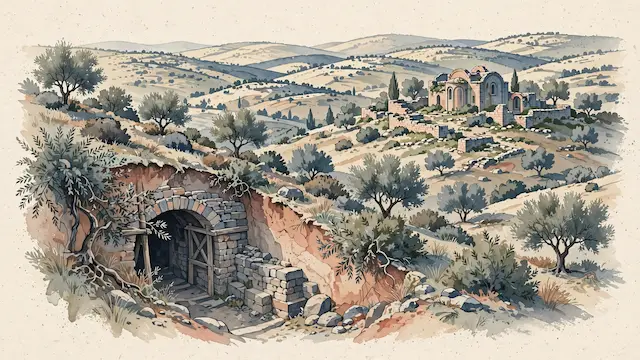
An ancient complex featuring hideout caves used by Jewish rebels against the Romans approximately 2,000 years ago, along with an early Byzantine church adorned with colorful mosaics, has been inaugurated in the Judean foothills. The site, located at Horvat Burgin in the Adulam-France Park, was opened to the public following extensive excavation, preservation, and development work by KKL-JNF, the Israel Antiquities Authority, and the Mateh Yehuda Regional Council. The excavations, previously led by Dr. Amir Ganor, Alon Klein, and Dr. Peter Gendelman of the Antiquities Authority, revealed evidence of settlement spanning from the Second Temple period to the Ottoman era. During the Second Temple period, a large village, possibly identified with Kfar Bish mentioned by Josephus Flavius, thrived there. In the early Roman period, extensive hideout systems were carved into the rock for residents preparing to fight the Romans. Despite this, the settlement was damaged and destroyed during the Bar Kokhba revolt. Pagan populations later settled on the ruins, constructing new surface buildings and excavating elaborate underground burial systems. A magnificent church with a mosaic-floored sanctuary and an adjacent monastery complex was established during the Byzantine period. The site also yielded numerous columbarium facilities and wine presses, indicating that its inhabitants at the time were supported by pigeon breeding, agriculture, and wine production.
Dr. Amir Ganor highlighted the site's significance as the largest ancient settlement in the area, noting that it had suffered extensive damage from antiquities looters. He credited intensive enforcement operations by the Antiquities Authority and KKL-JNF, including the establishment of the Adulam Caves Park and public accessibility efforts, with halting the damage and preserving the site. KKL-JNF Chairman Eyal Ostrovsky emphasized the organization's commitment to protecting historical heritage and making it accessible, fostering a connection between the land's past and present. Avishai Cohen, Head of the Mateh Yehuda Regional Council, stated that developing Horvat Burgin into an accessible heritage site enhances rural tourism in the region, describing Mateh Yehuda as a biblical land where history, heritage, and landscapes tell the story of the Jewish people. Ami Shachar of the Antiquities Authority described the project as a prime example of fruitful cooperation, turning Israel's history into a tangible experience for visitors. Minister of Heritage, Rabbi Amichai Eliyahu, concluded that the findings are a testament to deep roots and the eternal struggle for the land, connecting the heroism of the past to present sovereignty and resilience.
Mentioned
The same event, reported separately by each outlet. Open a few to compare what different newsrooms emphasize — and what they leave out.
Left 1Centre 3Right 3Haredi 1Other 1









Not the same event — other stories that share this one’s people, places, or theme: background, reactions, and follow-ups.
