
Israel Faces Minority Government or Unity Cabinet Amid Political Stalemate
Translated & summarized from Calcalist by baba
Israel is navigating a political deadlock with two main government formation scenarios: a minority government led by Benny Gantz or a broad unity cabinet. Both options face challenges in fulfilling election promises and overcoming deep political divisions, particularly regarding Benjamin Netanyahu's role and the inclusion of far-right parties. Pre-election polling errors exacerbated the situation, making repeat elections a last resort. The viability of either a minority or unity government hinges on excluding extremist elements and addressing key issues like conscription and state inquiries.
The story in 6 lines · by baba
- Israel faces forming either a minority government or a unity cabinet after recent elections.
- Benny Gantz could lead a minority government, which would be difficult to overthrow.
- A unity government is considered if the electorate rejected the far-right coalition but supported Netanyahu.
- Both government scenarios must exclude "Kahanists" and plans for "regime change."
- Pre-election poll errors regarding Arab voter turnout and Likud's strength contributed to the deadlock.
- Repeat elections are a last resort if no government can be formed or a budget passed.
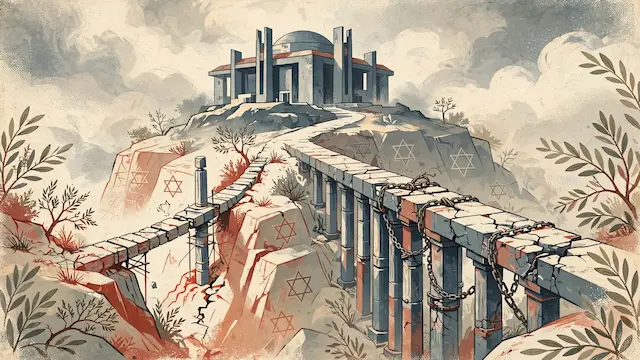
Following recent elections, Israel is grappling with two primary scenarios for forming a new government: a minority government or a unity government. The political landscape is complicated by campaign promises and deep divisions, particularly concerning the role of Benjamin Netanyahu and the inclusion of far-right parties.
One potential path involves Benny Gantz forming a minority government. This could be achieved by presenting a slim cabinet to the Knesset, potentially without coalition agreements, supported by a majority committed to removing Netanyahu. Such a government would be difficult to topple due to the requirement for a constructive no-confidence vote. Gantz could then gradually expand and strengthen the government.
The alternative is a unity government, predicated on the idea that the electorate sought to remove the "right-wing-over-everything" coalition while still making Netanyahu's Likud the largest party. This scenario also considers Netanyahu a risk, especially when leading a far-right government or when in opposition. Historically, more moderate partners in his governments have tempered his actions.
Both scenarios face significant hurdles, including the need to break election promises and navigate the "boycotts" of potential partners, such as Arab or Haredi parties, or Netanyahu himself. A minority government might face opposition based on relying on Arab parties or the need to address the conscription issue with Haredi parties. A unity government's main obstacle is Netanyahu, with concerns about his trustworthiness and the need for a state inquiry commission.
Two major miscalculations in pre-election polls contributed to the current deadlock: the underestimated surge in Arab voter turnout and the Likud's unexpectedly strong performance, which prevented a clear mandate for other parties. A third option, repeat elections, is currently being avoided unless no candidate can form a government or a budget is not passed.
A minority government offers advantages like combating racism and improving Israel's international standing, but faces opposition from figures like Avigdor Lieberman and Naftali Bennett, and potential incitement from Netanyahu's supporters. A unity government is only viable if the "Kahanists" and plans for "regime change" are excluded, with the primary challenge being Netanyahu's potential to act unchecked, even within a broader coalition.
Mentioned



