
Turkey's New Eastern Mediterranean Deal Could Impact Israel
Translated & summarized from Cursorinfo by baba
Turkey has proposed a new maritime deal to Egypt that could escalate its dispute with Greece and impact Israel's interests in the Eastern Mediterranean. The Turkish proposal, which Ankara claims would grant Egypt significant additional maritime territory, aims to revise maritime boundaries and strengthen Turkey's regional influence. This initiative comes amid ongoing disputes over maritime rights and energy resources, potentially complicating existing energy cooperation between Israel, Egypt, Greece, and Cyprus.
The story in 6 lines · by baba
- Turkey proposed a maritime deal to Egypt that could escalate its dispute with Greece and affect Israel.
- Ankara claims its proposal would grant Egypt over 15,000 sq km more maritime territory than a deal with Greece.
- The deal follows a controversial 2019 maritime agreement between Turkey and Libya, opposed by Greece.
- Egypt and Greece have a partial maritime agreement from August 2020, and Cairo faces a choice between Turkey and its Greek partners.
- Israel's energy cooperation with Egypt, Greece, and Cyprus could be impacted by regional shifts.
- The dispute involves control over strategic sea routes and access to energy reserves in the Eastern Mediterranean.
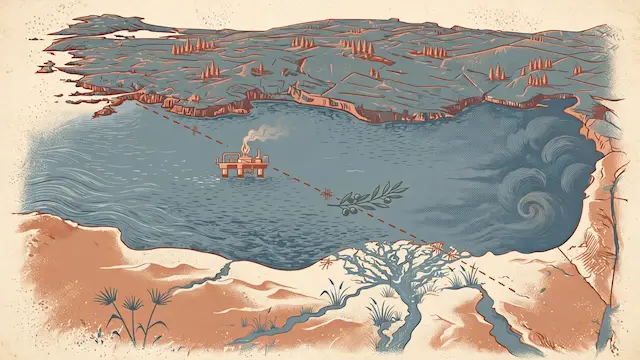
Turkey has proposed a maritime deal to Egypt that could escalate its dispute with Greece and affect Israeli interests. The initiative aims to bolster Turkey's position in the Eastern Mediterranean and draw Egypt into revising maritime boundaries. According to Maariv, Ankara is offering Cairo a new agreement that, by Turkish estimates, could grant Egypt over 15,000 square kilometers more maritime territory than a potential deal with Greece.
This proposal could intensify regional rivalries and impact Israel's interests. The Turkish Ministry of Defense confirmed readiness to negotiate with Egypt, stating any future agreement must consider mutual interests. However, the claimed additional area is a Turkish assessment not yet independently verified, and the agreement itself is not finalized. This move follows Libya's House of Representatives approving a maritime demarcation memorandum with Turkey on October 20, signed in November 2019, which Greece opposes for disregarding the maritime rights of its islands, particularly Crete.
Greece argues the Turkey-Libya deal infringes on its legal interests and international law, while Turkey claims its model is based on equitable distribution. The EU has criticized the agreement for potentially violating third-party rights. Greece, Cyprus, and Egypt also oppose the Turkey-Libya deal due to its implications for hydrocarbon exploration and extraction.
Egypt and Greece had previously signed a partial agreement on exclusive economic zones in August 2020, partly in response to Turkey's rapprochement with Libya. However, improving Turkey-Egypt relations present an opportunity for Ankara to seek a revision of Egypt's maritime boundary approach. While economically attractive for Egypt, accepting Turkey's proposal could strain relations with Greece and Cyprus, with whom Cairo has established regional cooperation. Notably, just a week prior, Egyptian and Greek foreign ministers opposed ratifying the Turkey-Libya agreement.
Israel's energy cooperation with Egypt, Greece, and Cyprus could be affected by shifts in the Eastern Mediterranean power balance. Changes in maritime borders might impact energy project implementation, exploration prospects, and undersea communications. Increased Turkish influence could also alter regional political dynamics and complicate cooperation among nations seeking to utilize shared maritime resources. The dispute extends beyond territory to control over strategic sea routes, energy reserves, and regional power's ability to set cooperation rules.
It remains uncertain if Egypt will engage in discussions or if negotiations will yield an agreement. However, Turkey's initiative signals its intent to strengthen its regional standing by leveraging improved ties with Cairo. For Greece, it risks further maritime rights disputes, and for Israel, it necessitates considering potential changes in regional energy and diplomatic configurations.
Mentioned
The same event, reported separately by each outlet. Open a few to compare what different newsrooms emphasize — and what they leave out.
Centre 2Other 1


Not the same event — other stories that share this one’s people, places, or theme: background, reactions, and follow-ups.



