
Turkey-Libya Maritime Deal Sparks Eastern Mediterranean Disputes
Translated & summarized from Arab48 by baba
Libya's eastern parliament has ratified a 2019 maritime deal with Turkey, redrawing exclusive economic zones and boosting Ankara's energy exploration ambitions. The agreement, which overlaps with claims by Greece, Egypt, and Israel, has sparked regional objections and concerns over escalating tensions. This diplomatic move by Turkey, which has engaged with both sides of Libya's internal conflict, aims to increase its influence in the Eastern Mediterranean's energy-rich waters, though its implementation faces significant geopolitical and legal challenges.
The story in 6 lines · by baba
- Libya's eastern parliament ratified a 2019 maritime deal with Turkey, redrawing economic zones.
- The agreement enhances Turkey's oil and gas exploration ambitions in the Eastern Mediterranean.
- Regional powers including Greece, Egypt, and Israel have objected to the deal, citing rights violations.
- The deal comes amid ongoing competition for energy resources in the Eastern Mediterranean.
- Turkey has also proposed maritime border negotiations with Egypt following Cairo's condemnation.
- The agreement's implementation faces potential legal and geopolitical challenges at sea.
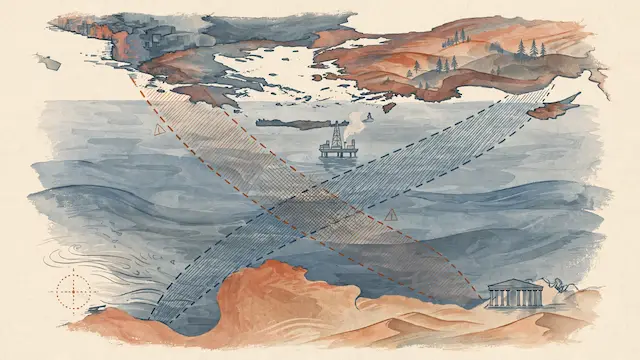
Turkey has achieved a diplomatic breakthrough in the Eastern Mediterranean maritime border demarcation issue after the House of Representatives in eastern Libya ratified a memorandum of understanding signed by the Tripoli government in 2019. This move bolsters Ankara's ambitions for oil and gas exploration but signals renewed disputes with regional countries that view the agreement as an infringement on their maritime rights. The memorandum outlines the redrawing of exclusive economic zones between Turkey and Libya, granting them special rights to exploit maritime resources. However, the overlap of some areas covered by the deal with maritime zones claimed by other nations raises concerns about escalating political and legal tensions in the region.
The ratification holds significant political importance, coming after years of division in Libya between the Tripoli government and rival authorities in the east, whose military camp is led by Khalifa Haftar. Turkey had intervened in 2019 to support the Tripoli government against an offensive by Haftar's forces on the capital, but has since managed to build relationships with various Libyan factions. Analysts see this rapprochement as a diplomatic gain for Ankara, enhancing its presence with both sides of the conflict. It also reflects the eastern Libyan camp's efforts to solidify ties with Turkey amid U.S. and UN pressure to reunify Libya and the pursuit by competing powers to secure influential positions in any future political settlement.
The agreement's significance is amplified by the ongoing competition for energy resources in the Eastern Mediterranean, following substantial gas discoveries off the coasts of Israel and Cyprus since 2009 and Egypt's Zohr field in 2015. These discoveries have intensified disputes over maritime border demarcation and exclusive economic zones due to overlapping claims among Turkey, Libya, Egypt, Cyprus, Israel, and Lebanon, making the definition of maritime sovereignty crucial for future exploration and energy projects. In this context, Libya's National Oil Corporation and the Turkish Petroleum Company signed a memorandum of understanding in June 2025 for geological and geophysical studies in Libyan waters, with the Turkish company also securing exploration rights in onshore and offshore areas.
The deal has drawn objections from the European Union, Greece, Israel, and Egypt, who argue it violates their sovereign rights and international law. Its ratification could provide Ankara with a political boost for further maritime survey activities and exploration negotiations, though implementation may face legal and geopolitical challenges. Experts believe the true test will be at sea, where the movements of survey and exploration vessels will reveal the parties' ability to translate the understanding into practical projects amidst potential regional opposition. Any escalation could also impact other projects, such as undersea power and communication cables.
Concurrently, Ankara continues to promote its role in supporting Libya's reunification, advocating for the integration of rival military structures into a unified national army. It has also proposed to Egypt negotiations on maritime border demarcation in the Eastern Mediterranean, following Cairo's condemnation of the Turkish-Libyan agreement as a violation of its sovereign rights. The deal presents Turkey with an opportunity to enhance its maritime and economic influence in the region, but simultaneously opens a new front of regional disputes that could shape energy cooperation and future geopolitical balances.
Mentioned
The same event, reported separately by each outlet. Open a few to compare what different newsrooms emphasize — and what they leave out.
Centre 1Arab 1

Not the same event — other stories that share this one’s people, places, or theme: background, reactions, and follow-ups.




