US Prepares for Major Military Action Against Iran Post-Midterms
Translated & summarized from Behadrei Haredim by baba
The U.S. has alerted Arab nations in the Persian Gulf to prepare for a significant military operation against Iran after the upcoming U.S. midterm elections. This potential campaign, aimed at degrading Iran's capabilities and forcing negotiations, is reportedly being planned in coordination with Israel. U.S. military assets are being repositioned and resupplied in the Middle East, and President Trump is reportedly leaning towards approving strikes that could target nuclear facilities. Israel has also prepared operational plans, with Prime Minister Netanyahu pushing for action to weaken the Iranian regime.
The story in 5 lines · by baba
- U.S. has alerted Gulf Arab states to prepare for a major military campaign against Iran post-midterm elections.
- The U.S. is bolstering Israel's air defenses and repositioning troops in the Middle East.
- President Trump is reportedly inclined to approve strikes targeting Iranian nuclear sites and infrastructure.
- Israel has prepared operational plans and Prime Minister Netanyahu supports renewed strikes.
- Iran has warned of severe retaliation against economic and civilian targets if attacked.
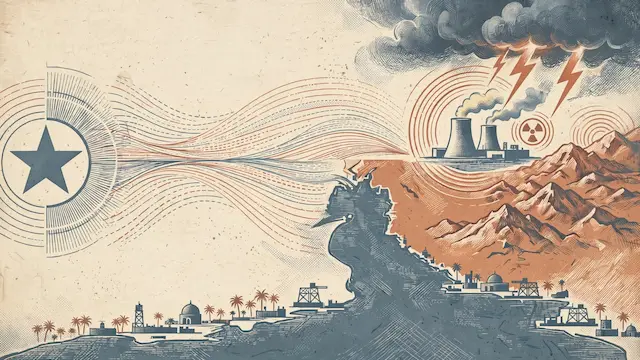
The United States has conveyed messages to several Arab nations in the Persian Gulf, urging them to prepare for a swift and intense military campaign against Iran following the upcoming American midterm elections. This information comes from sources familiar with the matter, as reported by The Wall Street Journal. These communications, transmitted through military and diplomatic channels, suggest a growing indication that the U.S. and Israel are laying the groundwork for a new series of significant military strikes against Tehran.
The primary objective of such an operation would be to substantially degrade Iran's military capabilities and compel its return to the negotiating table, despite the inherent risk of widespread regional escalation. In line with these preparations, the U.S. military is reportedly transferring an additional Patriot missile battery from Texas to Israel to bolster its air defense systems. Furthermore, U.S. forces in the Middle East have been repositioned from vulnerable bases due to concerns about potential retaliatory fire in a conflict scenario. American troops in the region have also begun replenishing their ammunition stockpiles, while bombers and fighter jets are on standby for potential strikes.
Looking ahead, a U.S. carrier strike group and a Marine Corps task force are expected to join an existing naval armada of approximately 20 warships next month. Sources close to President Donald Trump indicate that while a final decision has not been made, he is inclined to approve a broad strike after the elections, which could target Iranian nuclear sites and national infrastructure. Trump himself alluded to potential action in a recent rally, referencing past heavy bombings and suggesting either further "Operation Wrath of God"-like actions or a diplomatic agreement.
The White House has stated it does not comment on "sensitive military plans" but emphasized that the President "keeps all options on the table to ensure Iran does not obtain nuclear weapons." In Israel, operational plans and targets for an offensive have reportedly been prepared. Prime Minister Benjamin Netanyahu has consistently advocated for renewed strikes to weaken the Tehran regime, with the ultimate hope of its downfall. Such airstrikes would mark a shift from the current economic pressure campaign, which has significantly impacted Iran's collapsing economy through stringent sanctions and a naval blockade.
Despite past Israeli and U.S. efforts that destroyed a significant portion of Iran's nuclear program in a 2025 conflict, the Director General of the International Atomic Energy Agency (IAEA), Rafael Grossi, confirmed that while no attempts to rebuild destroyed facilities were identified, IAEA inspectors lack access to verify that nuclear materials were not smuggled. The underground Har-Mekhish site is a particular concern. Iran, however, remains defiant, possessing hundreds to thousands of missiles and utilizing the current lull to assemble new ballistic missiles. This recovery rate is a major concern for Israel. Iran has warned through various channels that another attack would be met with a severe response against economic and civilian targets across the Middle East, recalling its previous attacks on energy facilities, U.S. bases, and airports in the Gulf.
Mentioned
The same event, reported separately by each outlet. Open a few to compare what different newsrooms emphasize — and what they leave out.
Left 1Centre 4Right 2Haredi 1Arab 2Other 2














Not the same event — other stories that share this one’s people, places, or theme: background, reactions, and follow-ups.