
Election Turnout Slows Locally But Rises Nationally
Translated & summarized from Makor Rishon by baba
Voter turnout for the 26th Knesset elections saw a significant national increase compared to previous elections, with turnout reaching 55.7% by 4:00 PM. However, several cities, including Rahat, Bnei Brak, Beitar Illit, Afula, and Bat Yam, experienced a slowdown in the pace of voting during the afternoon hours. Despite the local moderation, the national turnout gap widened throughout the day, suggesting a potentially higher overall participation rate than in 2022.
The story in 6 lines · by baba
- National voter turnout for the 26th Knesset elections increased significantly compared to previous elections.
- Turnout reached 55.7% by 4:00 PM nationally, an 8.2 percentage point increase over the 2022 elections.
- Several cities, including Rahat, Bnei Brak, and Beitar Illit, saw a slowdown in voting pace during the afternoon.
- Rahat had already matched its final 2022 turnout percentage by 4:00 PM.
- Cities like Afula and Bat Yam also experienced a reduced voting pace in the afternoon.
- The final hours of voting are considered crucial for coalition formation.
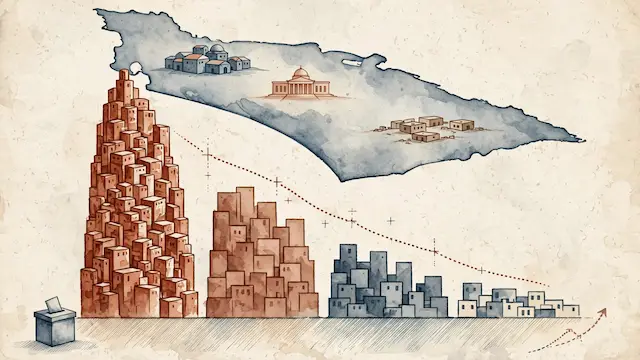
Voter turnout for the 26th Knesset elections showed a significant increase compared to previous elections, although interim data indicated a slowdown in the pace of voting in several monitored localities throughout the day. Cities like Rahat, Bnei Brak, Beitar Illit, Afula, and Bat Yam experienced a notable rise in turnout during the morning and afternoon hours. However, between the midday update and the 4:00 PM figures, the average hourly increase in turnout slowed down.
Nationally, the gap in turnout compared to the previous elections widened as the day progressed. By 10:00 AM, national turnout was 16.68%, compared to 15.9% at the same time in the 2022 elections. By 4:00 PM, turnout reached 55.7%, a substantial increase from 47.5% in the previous election, representing an 8.2 percentage point difference.
In Rahat, turnout rose from 14% at 10:00 AM to 36.9% by noon, and reached 60.6% by 4:00 PM. The average hourly increase dropped by approximately 48% from the morning to the afternoon. Notably, by 4:00 PM, Rahat had already matched its final turnout percentage from the 2022 elections.
Similar slowdowns were observed in Bnei Brak and Beitar Illit, though less pronounced than in some Arab communities, giving them a relative advantage in the later hours. In Bnei Brak, turnout reached 53.3% by 4:00 PM, and in Beitar Illit, it was 52%. Both cities were still below their final 2022 turnout figures by 4:00 PM.
Afula and Bat Yam, cities traditionally associated with the Likud party, also saw a decrease in the pace of voting. In Afula, turnout was 50.6% by 4:00 PM, and in Bat Yam, it was 40%. The average hourly increase slowed by around 49% in Afula and 53% in Bat Yam. Both cities had not yet reached their 2022 final turnout percentages by 4:00 PM.
While the local pace of increase moderated in some areas, the national advantage over previous elections continued to grow. The article notes that interim data from localities may not have been updated regularly, potentially affecting accuracy. The final hours of voting are often crucial, and a surge in turnout could be decisive in coalition formation.
The same event, reported separately by each outlet. Open a few to compare what different newsrooms emphasize — and what they leave out.
Right 2Haredi 1


Not the same event — other stories that share this one’s people, places, or theme: background, reactions, and follow-ups.


