
Israel Votes in 26th Knesset Elections as Polls Open Nationwide
Translated & summarized from Now 14 by baba
Israelis are voting in the 26th Knesset elections on Tuesday, with over 7.3 million eligible voters casting ballots at 12,018 polling stations nationwide. Special arrangements are in place for hospitalized patients, prisoners, and evacuated communities. Prominent political figures, including the President and several ministers, have voted and urged public participation. Voting abroad concluded with a higher turnout than the previous election. Preliminary results are expected overnight, with official results due within eight days.
The story in 6 lines · by baba
- Polling stations opened across Israel Tuesday for the 26th Knesset elections, with over 7.3 million eligible voters.
- Most polling stations opened at 7:00 AM, with others at 8:00 AM; all will close at 10:00 PM.
- Special voting arrangements are in place for hospitalized patients, prisoners, and evacuated communities.
- Prominent political figures, including the President and several ministers, have cast their votes.
- Voting abroad concluded with an 86.7% turnout, a significant increase from the previous election.
- Preliminary election results are expected overnight, with official results due within eight days.
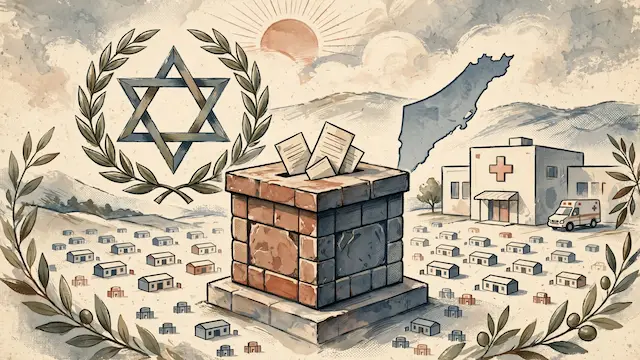
Polling stations across Israel opened Tuesday morning for the 26th Knesset elections, with millions of eligible voters heading to the polls. Most stations began operations at 7:00 AM, with others opening at 8:00 AM due to shortened hours. Regular polling stations will close at 10:00 PM, while those with abbreviated hours will close two hours earlier. Reports indicated a large turnout in Tel Aviv.
Over 7.3 million Israelis are eligible to vote in this election, an increase of over 543,000 compared to the previous Knesset elections. A total of 12,018 polling stations have been set up nationwide, including 6,208 accessible stations for individuals with disabilities. Special provisions have also been made for hospitalized patients, prisoners, and approximately five evacuated communities.
Several prominent political figures cast their votes early in the day. Former Sephardi Chief Rabbi Yitzhak Yosef voted in Jerusalem accompanied by MK Yoni Meshriki. President Isaac Herzog also voted in Jerusalem. Shas Chairman Aryeh Deri, voting in Jerusalem, urged the public to participate, framing the election as a struggle for the country's Jewish character. MK Yoav Ben-Tzur of Shas voted near his home in Jerusalem. Ofer Vinter, chairman of Am Ech Israel, voted in the Lower Galilee, calling for unity. Deputy Minister Almog Cohen voted in Ofakim, urging residents of the South to vote for Likud. Minister of Communications Shlomo Karai posted a call to vote, referencing the biblical commandment "You shall not stand idly by the blood of your neighbor." Minister of National Security Itamar Ben-Gvir voted in Kiryat Arba, stating that a victory for the "other side" would lead to a government with Mansour Abbas and emphasizing his role as the "right-wing marker" in a Netanyahu government. Shimon Tobol, a candidate for Noam, voted in Beersheba. MK Gilad Kariv of the Democrats, MK Vladimir Beliak, and former MK Orit Farkash-Hacohen also cast their votes.
Voting for Israelis abroad concluded earlier, with 101 polling stations operating in 99 diplomatic and consular missions worldwide. Approximately 86.7% of eligible voters abroad participated, a significant increase from the previous election. The election threshold, requiring parties to secure at least 3.25% of the valid votes to enter the Knesset, remains a critical factor in determining the final seat distribution. In the previous election on November 1, 2022, voter turnout was 70.63%. Preliminary results are expected overnight, with official results due within eight days.
Mentioned
The same event, reported separately by each outlet. Open a few to compare what different newsrooms emphasize — and what they leave out.
Left 1Centre 1Right 1Haredi 1Other 3






Not the same event — other stories that share this one’s people, places, or theme: background, reactions, and follow-ups.


