
Israel Election Day: Special Voting Procedures Detailed
Translated & summarized from Kikar HaShabbat by baba
Israel's Central Elections Committee is overseeing special voting procedures for citizens in hospitals, prisons, and evacuated communities on election day. Deputy Director Marganit Levi detailed the process, including the use of double envelopes to prevent fraud, with hundreds of counting committees set to begin work. Special stations are serving evacuated communities and prisons, while hospital voting depends on patient conditions. A high volume of inquiries suggests strong voter turnout.
The story in 5 lines · by baba
- Special polling stations are operating in Israeli hospitals, prisons, and evacuated communities on election day.
- The Central Elections Committee is using double envelopes to prevent duplicate voting.
- Hundreds of counting committees will begin tallying votes from special stations Tuesday evening.
- Approximately 2,000 voters from four evacuated communities are using dedicated polling stations.
- A high number of inquiries from citizens, especially hospitalized patients, indicates strong voter interest.
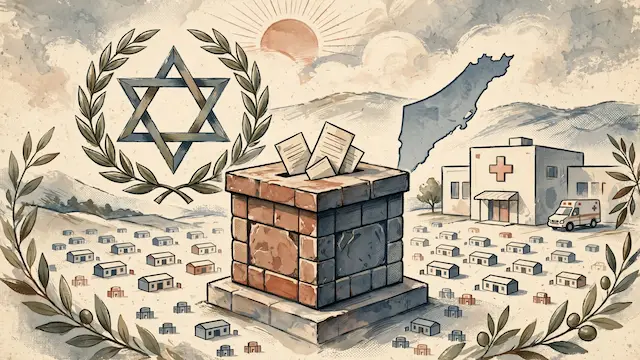
On election day in Israel, the Central Elections Committee is managing a special voting process for citizens unable to cast ballots at regular polling stations. This includes hundreds of polling stations set up in hospitals, institutions for individuals with mobility limitations, prisons, detention centers, and for evacuated communities. Marganit Levi, Deputy Director of Special Voting, explained that these 317 special polling stations operate outside the standard voter registry. Additionally, 101 polling stations abroad concluded their voting on October 16th, bringing the total to 418 special stations.
A key procedure involves checking double envelopes to prevent duplicate voting. After special polling stations close at 8:00 PM, envelopes will be sent to the Knesset for verification. The outer envelopes, containing voter details, will be separated from the inner voting envelopes. Hundreds of counting committees are expected to begin work on Tuesday evening, counting these double envelopes alongside those from the IDF.
Special polling stations are serving four evacuated communities: Kfar Aza, Nir Oz, Bari, and Holit, with five dedicated stations for approximately 2,000 voters. Evacuees can also use other accessible special polling stations. In prisons, around 12,000 potential voters, including guards, are eligible. The number of hospital voters is difficult to estimate, depending on patient numbers and conditions, though the Ministry of Health enabled tens of thousands of hospitalized patients to vote, with polling stations in facilities over 50 beds.
Levi noted a significant increase in inquiries from citizens, particularly hospitalized patients, wishing to vote, which she interprets as a sign of high turnout. However, some patients cannot vote due to their critical medical condition, a decision left to medical discretion. Overall, 7.3 million eligible voters are participating in the election, with approximately 12,000 regular polling stations operating nationwide alongside the special voting system.
Mentioned
The same event, reported separately by each outlet. Open a few to compare what different newsrooms emphasize — and what they leave out.
Left 1Centre 1Right 1Haredi 1Other 3






Not the same event — other stories that share this one’s people, places, or theme: background, reactions, and follow-ups.



