
Israel Heads to Polls for 26th Knesset Elections: What Voters Need to Know
Translated & summarized from Arutz Sheva by baba
Israel is holding elections for the 26th Knesset on Tuesday, with over 7.3 million eligible voters. Voters need valid identification to cast ballots at 12,018 polling stations, with special arrangements for soldiers, police, and displaced persons. Free public transport will be available on certain routes from Monday evening. Vote counting begins after polls close at 10 PM, with final results, including a record number of 'double envelopes,' expected by Thursday afternoon.
The story in 5 lines · by baba
- Over 7.3 million Israelis are eligible to vote in the 26th Knesset elections on Tuesday.
- Voters require valid identification to cast ballots at 12,018 polling stations nationwide.
- Special voting procedures are in place for soldiers, police, hospitalized patients, and displaced citizens.
- Free public transportation will be offered on select routes from Monday evening until election day ends.
- Final election results, including a significant number of 'double envelopes,' are expected by Thursday afternoon.
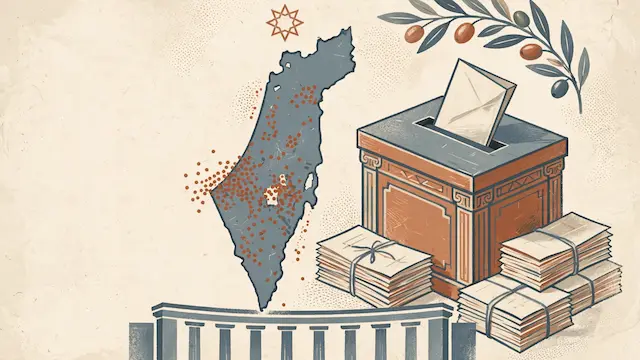
Israel is set to hold its elections for the 26th Knesset on Tuesday, with 7,331,981 eligible voters casting ballots at 12,018 polling stations. Thirty-six parties are competing for seats in parliament. Polling stations will generally be open from 7:00 AM to 10:00 PM, though hours will be shorter in smaller communities and special institutions like hospitals and prisons, where voting concludes at 8:00 PM.
To vote, citizens must present valid identification, such as an ID card, driver's license, or passport. While the voter notification card mailed by the Interior Ministry is helpful for locating polling stations, it is not mandatory. Special voting arrangements are in place for soldiers, police officers, and hospitalized individuals. Soldiers can vote at military bases or their registered polling stations. Police officers can vote at any station nationwide upon showing their badge. Hospitals with at least 50 beds and nursing homes with over 50 residents will have dedicated polling stations. Displaced individuals due to the ongoing conflict can vote at their original registered location or at special polling stations set up for evacuated communities like Be'eri, Kfar Aza, Nir Oz, and Holit.
Approximately 6,208 polling stations will be accessible, with 3,620 designated as special accessible stations for voters with mobility issues. These voters can cast ballots at stations they are not registered to, using an external envelope. Voters with non-visible mobility impairments will need to sign a declaration. To ensure a valid vote, voters should use official ballots provided at the station, place only one ballot in the envelope, and avoid any markings. Using unofficial or non-standard ballots may lead to disqualification, though submitting two or three identical ballots for the same party will not invalidate the vote.
Free public transportation will be available on Israel Railways and intercity bus lines exceeding 15 kilometers from 8:00 PM Monday until the end of service on election day. Local bus routes will operate as usual with payment. Weather forecasts predict a drop in temperatures with seasonal averages, along with localized rain, particularly in the south and east, potentially leading to flash floods in certain areas.
Vote counting begins after polls close at 10:00 PM, with partial results expected overnight. The final results, including the count of 'double envelopes', ballots cast by those voting outside their registered station, are anticipated by Thursday afternoon. These double envelopes, expected to total between 600,000 and 650,000 votes, represent a significant bloc that could influence the final seat allocation, as seen in past elections where they have shifted the balance of power, sometimes favoring Zionist parties over Haredi and Arab parties.
The same event, reported separately by each outlet. Open a few to compare what different newsrooms emphasize — and what they leave out.
Centre 2Right 2Haredi 2Arab 2Other 3









Not the same event — other stories that share this one’s people, places, or theme: background, reactions, and follow-ups.


