
Israel Heads to Polls in Crucial Election Amid War and Political Turmoil
Translated & summarized from Now 14 by baba
Israel is holding its 26th Knesset elections on October 27, 2026, with key issues including the Gaza war, conscription, and the economy dominating the campaign. Prime Minister Benjamin Netanyahu's Likud is seeking re-election, facing challenges from opposition parties like Gadi Eisenkot's Yachad and Naftali Bennett's Yachad. The election results are expected to determine whether a right-wing or left-wing coalition government is formed, or if the country faces another round of elections.
The story in 6 lines · by baba
- Israel's 26th Knesset elections are scheduled for Tuesday, October 27, 2026, after a government completed its term.
- Key issues include the Gaza war, conscription, judicial reform, and the economy.
- Prime Minister Benjamin Netanyahu's Likud party is campaigning on security and continuity.
- Opposition parties like Gadi Eisenkot's Yachad and Naftali Bennett's Yachad are challenging the incumbent government.
- Potential outcomes include a right-wing government, a left-wing government, or repeat elections.
- 7,331,981 eligible voters will cast ballots at 12,018 polling stations.
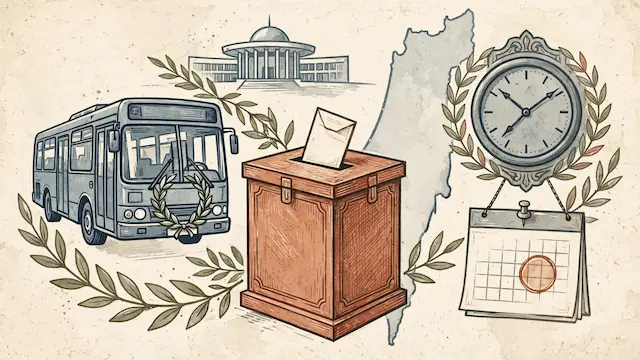
Israel is set to hold its 26th Knesset elections on Tuesday, October 27, 2026, marking the first time since 1988 that elections are held on their scheduled date after a government completed a full four-year term. The election day is a national holiday, with 7,331,981 eligible voters casting ballots at 12,018 polling stations. The election campaign has been dominated by the aftermath of the October 7th attacks, the ongoing war in Gaza, conscription issues, the judicial reform, and the economic situation.
Prime Minister Benjamin Netanyahu's Likud party has campaigned on a platform of continued governance, security strengthening, and highlighting the outgoing government's achievements, while warning against a left-wing government supported by Arab parties. US President Donald Trump has publicly endorsed Netanyahu. Netanyahu has pledged to continue the judicial reform and form a government based on right-wing parties.
Gadi Eisenkot's new party, Yachad, has emerged as a significant force in the opposition, focusing on a security-state image and presenting Eisenkot as a candidate for prime minister. The party has criticized the government's handling of the October 7th events and Netanyahu's perceived failure to decisively end conflicts.
Naftali Bennett has returned with his new party, Yachad, formed in alliance with Yesh Atid leader Yair Lapid. Their campaign emphasizes stability and reform, blending national-minded right-wing and centrist politics. Bennett has also focused on criticizing Qatar and Netanyahu's ties to the country, and has shifted his stance on the judicial reform, now supporting its cancellation.
Bezalel Smotrich's Religious Zionism party has formed a technical bloc with Moshe Feiglin's Identity party, focusing on settlement expansion in Judea and Samaria, opposing a two-state solution, and promoting Jewish identity. Itamar Ben-Gvir's Otzma Yehudit party has centered its campaign on personal security, governance, harsher conditions for security prisoners, and combating crime in the Arab community, while also attacking Netanyahu's intentions to form a government without him.
Aryeh Deri's Shas party has run a social and traditional campaign, emphasizing aid to the weak, education, and yeshivas. United Torah Judaism has faced internal turmoil, including the removal of key figures from its list, and has focused on the conscription law and the fate of yeshiva students, while also navigating its bloc affiliation.
Avigdor Lieberman's Yisrael Beiteinu party has campaigned on universal conscription, confronting the Haredi sector, and a tough security stance. The Democrats, a union of Labor and Meretz led by Yair Golan, have focused on protesting the government, shifting priorities, and ending the war, advocating for a Jewish-Arab government and the transfer of West Bank territories.
Ofer Winter's new party, Am Israel, has focused on security and Jewish identity, but has struggled to cross the electoral threshold. Ra'am, led by Mansour Abbas, has focused on civil issues within the Arab community and aims to be part of a future left-wing led government. The Joint List has campaigned for high Arab voter turnout, addressing issues of prisoners, discrimination, and ending the war.
Polling stations will open at 7 AM and close at 10 PM, with exit polls expected at closing time. Initial results will be released around midnight, with final results by November 4th. The process of forming a government will begin with recommendations to President Isaac Herzog, who will task a candidate with forming a coalition within 28 days, extendable by 14 days. Three main scenarios are anticipated: a right-wing bloc government, a left-wing bloc government with Arab parties, or a stalemate leading to repeat elections.
Mentioned
The same event, reported separately by each outlet. Open a few to compare what different newsrooms emphasize — and what they leave out.
Centre 3Right 4Arab 2Other 1









Not the same event — other stories that share this one’s people, places, or theme: background, reactions, and follow-ups.