
Israel's 26th Knesset Election Marks First Full Term Since 1988
Translated & summarized from Now 14 by baba
Israelis are voting in the 26th Knesset elections, an unusual event as the previous Knesset completed its full four-year term for the first time since 1988. This contrasts with 13 consecutive instances of early elections since 1988, often caused by coalition crises and political instability. The 25th Knesset, despite facing significant challenges like judicial reform debates and the ongoing war, managed to serve its full term. The election outcome will indicate if Israel can sustain parliamentary stability or return to frequent early elections.
The story in 5 lines · by baba
- Israel's 26th Knesset elections are historic, marking the first full term completion since 1988.
- The previous 13 Knesset elections since 1988 were all called early.
- Coalition crises and political disputes have historically led to premature elections in Israel.
- The 25th Knesset served its full term despite major challenges including judicial reform and war.
- The election outcome will test Israel's potential for sustained parliamentary stability.
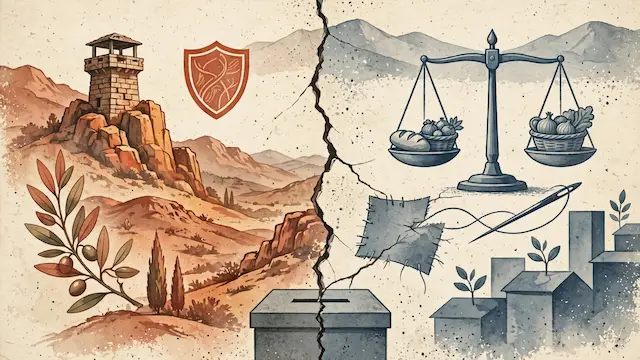
Israelis are heading to the polls for the 26th Knesset elections, an event marked as historically unusual because, for the first time since 1988, the outgoing Knesset has completed its full four-year term. This marks a significant departure from the norm in Israeli politics, where elections have been called early 13 consecutive times since the 12th Knesset was elected in 1988.
Over the past four decades, Israeli governments have frequently been dissolved due to coalition crises, political disputes, and the inability to pass budgets, leading to premature elections. Notable instances include the early elections in 1992 following the collapse of Yitzhak Shamir's government and in 1996 after the assassination of Prime Minister Yitzhak Rabin. The period between 2019 and 2022 was particularly volatile, with five elections held in less than four years due to difficulties in forming stable governments.
The 25th Knesset, elected in November 2022 and forming Benjamin Netanyahu's government, faced numerous challenges including sharp disagreements over the judicial reform, public protests, the issue of ultra-Orthodox conscription, and the events of October 7th, which led to a prolonged war. Despite these internal and external pressures, the Knesset did not dissolve before its legal term ended, with elections scheduled for October 27, 2026.
While the completion of a full term is rare in Israel, the country still experiences a relatively high frequency of elections compared to other parliamentary democracies. The upcoming election will determine whether the next government can maintain parliamentary stability or if Israel will revert to a cycle of early elections.
Mentioned
The same event, reported separately by each outlet. Open a few to compare what different newsrooms emphasize — and what they leave out.
Centre 1Right 2

Not the same event — other stories that share this one’s people, places, or theme: background, reactions, and follow-ups.


