Lula Wins Brazilian Presidency, Inherits Economic Woes and Political Turmoil
Translated & summarized from Calcalist by baba
Luiz Inácio Lula da Silva has won Brazil's presidential election, defeating Flávio Bolsonaro. The victory is marred by Bolsonaro's refusal to concede and market turmoil, with significant drops in stock values and currency devaluation. Brazil faces high inflation, a large deficit, and substantial national debt. Relations with Israel are expected to worsen under Lula's presidency, and he will govern with a hostile Congress.
The story in 6 lines · by baba
- Lula da Silva won Brazil's presidency with 51.79% of the vote, defeating Flávio Bolsonaro.
- Bolsonaro is challenging the election results, citing irregularities in voting extensions.
- Brazilian markets reacted negatively, with stocks falling and the Real devaluing.
- Brazil faces significant economic challenges including high inflation and a large national debt.
- Relations between Brazil and Israel are expected to deteriorate under Lula's leadership.
- Lula will govern with a right-leaning Congress that holds a majority.
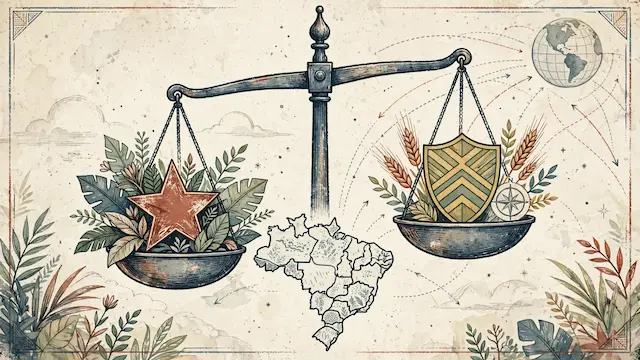
Luiz Inácio Lula da Silva, widely known as Lula, has won Brazil's presidential election in a runoff, securing 51.79% of the vote against Senator Flávio Bolsonaro's 48.21%. This marks the first time since 1989 that a candidate who lost the first round has won the presidency. The victory, particularly among voters in the impoverished northeast, brings Lula back to power after his previous imprisonment for corruption charges, from which he was released.
However, the election's aftermath has been contentious. Bolsonaro has announced his intention to challenge the results, citing irregularities. A key point of contention is a Supreme Court Justice's decision, Cristiano Zanin, who previously represented Lula, to extend voting by two hours in nine states due to alleged public transport disruptions. Bolsonaro's campaign also sought extensions in certain municipalities due to adverse weather conditions. The dispute centers on the extent of the extension, with Lula's campaign accusing Bolsonaro of intentionally disrupting transport in poorer areas, a charge that could lead to Bolsonaro losing his voting rights for eight years.
The market reaction to Lula's victory has been severe. The EWZ ETF, tracking Brazilian stocks in New York, plummeted nearly 20% after hours. Futures on the dollar surged approximately 10%, and the Brazilian stock index opened down 13% in Tokyo. This reflects not only political uncertainty but also deep-seated economic concerns.
Brazil is grappling with inflation exceeding its target, standing at 4.58% for the year ending September, while the central bank's interest rate is 13.75%. The government faces a significant primary deficit, with the public sector recording a deficit of about 1% of GDP from January to August, far exceeding the target. National debt has reached 82.9% of GDP, nearing historic highs.
For Israel, the outcome represents a setback. Prime Minister Benjamin Netanyahu had publicly supported Bolsonaro. Relations with Brazil under Lula, who is described as anti-Israel, are expected to be strained, with no ambassadors currently in place. Lula faces a right-leaning Congress, where his party holds a minority, complicating his ability to implement policy. Analysts like Dr. Igor Barnaboim from Harvard University express concerns about financing public debt and predict capital flight, currency devaluation, and higher interest rates, impacting the stock market. The economic challenges are immense, compounded by an uncooperative Congress and a defeated opponent refusing to concede.
Mentioned
The same event, reported separately by each outlet. Open a few to compare what different newsrooms emphasize — and what they leave out.
Left 2Centre 3Right 5Arab 2Other 5



















Not the same event — other stories that share this one’s people, places, or theme: background, reactions, and follow-ups.