Lula Wins Brazilian Presidency Amid Political and Economic Differences with Washington
Translated & summarized from Al-Shams by baba
Luiz Inácio Lula da Silva has won the Brazilian presidency for a new term, defeating Flavio Bolsonaro with 51.79% of the vote. His victory signals a leftist leadership for Brazil, which faces political and economic differences with the U.S. administration. Lula's return to power after previous terms presents challenges in managing domestic economic issues and navigating international relations, including with the U.S. and Israel, where his critical stances have caused friction.
The story in 6 lines · by baba
- Luiz Inácio Lula da Silva won Brazil's presidential election with 51.79% of the vote.
- Lula's victory secures a leftist leadership for Brazil, facing divergences with the U.S.
- The election outcome reflects a deep political division within Brazil.
- Lula's government differs with Washington on trade, national autonomy, and international roles.
- Brazil's relations with the U.S. and Israel are expected to be impacted by Lula's foreign policy.
- The new administration faces significant domestic economic and congressional challenges.
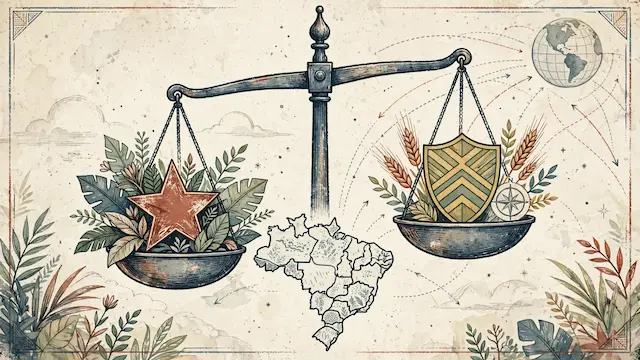
Luiz Inácio Lula da Silva has returned to the Brazilian presidency for a new term, winning the second round of elections against his rival Flavio Bolsonaro. The victory secures a leftist leadership for Brazil, which faces political and economic divergences with the administration of U.S. President Donald Trump. Official results showed Lula securing approximately 51.79% of the valid votes, compared to 48.21% for Flavio Bolsonaro, son of former Brazilian President Jair Bolsonaro. The closely contested election reflects the ongoing political division within the country between leftist and conservative factions.
Lula's win comes amid differing stances between his government and Washington on several issues, particularly concerning trade policies and national decision-making autonomy, as well as differing views on Brazil's role in Latin America and on the international stage. Relations between Brazil and the U.S. have seen tensions over economic and trade matters, with Lula emphasizing the need to protect Brazilian sovereignty and resist external pressure on national decisions. The new term presents the Brazilian president with the task of managing the country's relationship with the United States while maintaining his political direction on trade and international cooperation. Differences are expected to persist on regional and international issues.
Flavio Bolsonaro, representing the conservative right, based his campaign on the political base built by his father during his presidency. The race was marked by intense competition, reflecting a clear division in Brazilian society regarding the country's political and economic future.
Lula, 80, returns to power after a long political career, having previously served as president from 2003 to 2006. The incoming government faces complex economic and social challenges, including managing public debt and borrowing costs, alongside difficulties in passing legislation due to a Congress that does not guarantee easy consensus. Externally, political circles are watching the future of Brazilian-U.S. relations, especially given the differing approaches between Lula and the U.S. administration on trade, regional influence, and international policy.
Relations between Lula and the Israeli government are strained due to his positions on the war in Gaza and his criticism of Israeli policies. His foreign policy orientations also differ from Israeli government positions on several regional matters. With Lula continuing as president, relations with Israel and the United States remain among the issues that could be affected by Brazil's foreign policy direction, as Brazil seeks to enhance its decision-making independence and expand its international ties.
Mentioned
The same event, reported separately by each outlet. Open a few to compare what different newsrooms emphasize — and what they leave out.
Left 2Centre 3Right 5Arab 2Other 3
















Not the same event — other stories that share this one’s people, places, or theme: background, reactions, and follow-ups.