
Israel Switches to Winter Time, Clocks Move Back One Hour
Translated & summarized from Arutz Sheva by baba
Israel officially moved to winter time early Sunday morning, setting clocks back one hour. This change, governed by a 2013 law, will last until March 26, 2027. While automatic adjustments are common on digital devices, the shift means earlier sunsets and potentially more traffic in the dark.
The story in 5 lines · by baba
- Israel switched to winter time early Sunday, moving clocks back one hour.
- Winter time will be in effect until March 26, 2027.
- The Time Determination Law of 2013 regulates the time changes in Israel.
- Earlier sunsets are a consequence of the shift to winter time.
- Increased traffic congestion in the dark is a noted disadvantage.
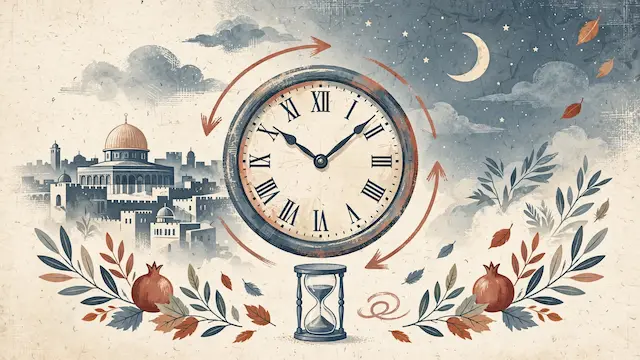
Israel transitioned to winter time early Sunday morning, with clocks being set back one hour from 2:00 AM to 1:00 AM. This change aligns with the Time Determination Law of 2013, which governs the shifts between standard and daylight saving time in the country. The law stipulates that the switch to winter time occurs on the last Sunday of October, and the return to daylight saving time happens on the Friday preceding the last Sunday in March.
Winter time will remain in effect until March 26, 2027. While many smartphones and computers automatically adjust to the time change if set to update automatically for Israel's time zone, manual adjustment may be necessary for some devices. The purpose of winter time is to better suit the shorter daylight hours of winter, resulting in earlier sunrises. However, this also means that daylight will fade earlier in the afternoon and evening.
The primary drawback of winter time is the significant reduction in daylight during the late afternoon. This often leads to increased traffic congestion during dark hours and can impact leisure activities and outdoor pursuits.
Mentioned
The same event, reported separately by each outlet. Open a few to compare what different newsrooms emphasize — and what they leave out.
Left 1Centre 6Right 5Haredi 3Arab 2Other 4























Not the same event — other stories that share this one’s people, places, or theme: background, reactions, and follow-ups.
