
Israel Switches to Winter Time, Clocks Fall Back One Hour
Translated & summarized from Now 14 by baba
Israel is switching to winter time tonight, October 24-25, 2026, moving clocks back one hour at 2 AM to 1 AM, providing an extra hour of sleep but earlier sunsets. This annual change, governed by law, will last until March 26, 2027. While most digital devices update automatically, manual adjustments may be needed for older appliances. Debates continue regarding the benefits and drawbacks of seasonal time changes, with some advocating for year-round summer time.
The story in 6 lines · by baba
- Israel switches to winter time tonight, October 24-25, 2026, with clocks moving back one hour.
- The change provides an extra hour of sleep but results in earlier sunsets and darker afternoons.
- Most smartphones and connected devices will update automatically, but manual adjustments may be needed.
- Winter time is Israel's standard time (UTC+2), lasting until March 26, 2027.
- Debates persist over the necessity of winter time, with some favoring year-round summer time.
- The Manufacturers Association estimates year-round summer time could save 440 million shekels annually.
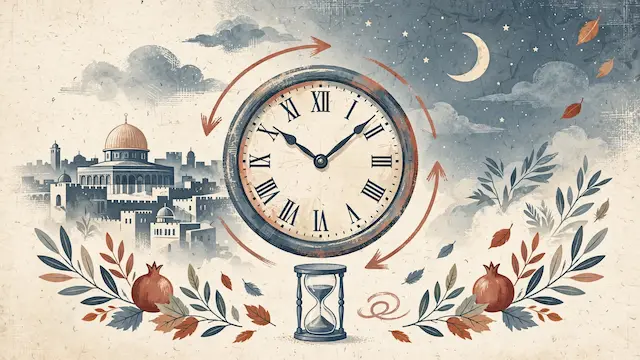
Israel will transition to winter time tonight, October 24-25, 2026, with clocks set back one hour at 2:00 AM to 1:00 AM. This change grants an extra hour of sleep but results in earlier sunrises and sunsets. The shift occurs annually on the last Sunday of October, as per the Time Determination Law, and will remain in effect until March 26, 2027.
The immediate consequence is an additional hour of sleep. However, daylight hours will shorten, with the sun rising and setting approximately an hour earlier by the clock. This means darker afternoons and evenings throughout the winter months, impacting daily routines, including Shabbat candle-lighting times, which will advance by about an hour.
Most smartphones, computers, and connected watches are expected to update automatically. Users are advised to verify that automatic date and time updates and the Israel/Jerusalem time zone are enabled in their device settings to prevent issues. Non-networked devices such as wall clocks, older alarm clocks, car clocks, and some kitchen appliances will require manual adjustment.
Winter time is Israel's standard time (UTC+2), while summer time is UTC+3. The seasonal change aims to align activity hours with available daylight. Despite the practical benefits of earlier mornings, a public debate persists regarding the necessity of winter time. Opponents argue that earlier sunsets negatively affect leisure time, commerce, and quality of life, advocating for year-round summer time. Conversely, a key argument against permanent summer time is the later sunrise during winter, potentially causing many students and workers to start their day in darkness.
Calls to abolish winter time continue, with the President of the Manufacturers Association, President of the Manufacturers Association, advocating for year-round summer time to benefit the economy and reduce traffic accidents. The association estimates that maintaining summer time throughout the year could yield annual economic benefits of approximately 440 million shekels and further energy savings. Despite these proposals, no legislative changes have been made, and the seasonal clock change will proceed as usual.
The same event, reported separately by each outlet. Open a few to compare what different newsrooms emphasize — and what they leave out.
Left 1Centre 6Right 5Haredi 3Arab 2Other 4






















Not the same event — other stories that share this one’s people, places, or theme: background, reactions, and follow-ups.
