
Arab Vote Crucial in Israeli Elections Amid Political Division
Translated & summarized from Alarab by baba
Israeli elections on October 27, 2026, are characterized by deep political divisions, with the Arab vote seen as crucial for influencing power dynamics and addressing community issues. The article calls for an ambitious 80% Arab voter turnout to impact policies on crime, housing, and civil rights. It highlights concerns about a potential Netanyahu government with far-right figures and emphasizes that achieving 20 Arab Knesset seats through unified Arab party efforts could significantly challenge the current leadership.
The story in 5 lines · by baba
- Israeli elections on October 27, 2026, are marked by sharp political divisions and a struggle over future policies.
- The Arab vote is highlighted as a crucial factor in the balance of power within the Knesset.
- An ambitious goal of 80% Arab voter turnout is proposed to influence policies affecting Arab citizens.
- Concerns exist regarding a potential government led by Benjamin Netanyahu, Itamar Ben-Gvir, and Bezalel Smotrich.
- Achieving 20 Arab Knesset seats through unified Arab party efforts is seen as a significant political blow to current leadership.
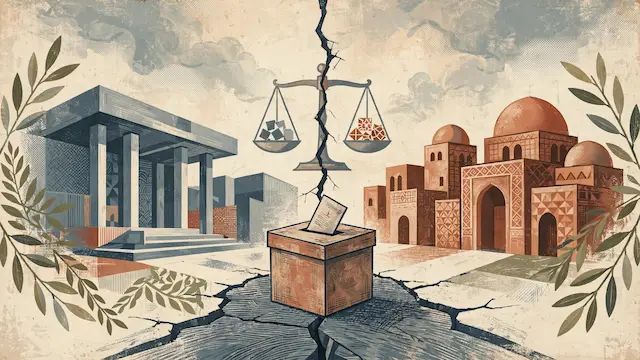
Israeli elections scheduled for October 27, 2026, are marked by sharp political divisions and a struggle over the nation's future domestic and regional policies. The participation of the Arab public is highlighted as a significant factor in the balance of power within the Knesset, offering an opportunity to enhance political representation and advocate for the vital daily rights and interests of Arab citizens.
The elections' importance extends beyond the next prime minister, addressing issues directly impacting the Arab community, including crime and violence, personal security, home demolitions, the housing crisis, discrimination in budget allocation, and the future of civil and national rights. The article argues that broad Arab participation is not merely a democratic right but a means to influence decisions shaping the upcoming period. It proposes an ambitious goal of 80% voter turnout among Arab citizens, emphasizing awareness, responsibility, and belief in the power of the Arab vote to effect real political change.
Benjamin Netanyahu is identified as a key figure in the electoral contest, given his long tenure in power and ongoing controversies, including his criminal trials. Opposition forces are seeking to present an alternative government, but the article questions whether a leadership change would truly alter policies affecting Arab and Palestinian citizens. The prospect of a government led by Netanyahu, potentially including Itamar Ben-Gvir and Bezalel Smotrich, raises concerns among many Arab citizens due to their stances on Palestinians, settlements, the occupation of the West Bank, and the potential displacement of Gaza's residents.
These concerns are amplified by the ongoing crime and violence crisis, making personal security a pressing demand in Arab towns. While a new government alone doesn't guarantee solutions, the article stresses that personal security, equality, and rights must be central to the electoral discourse. Achieving 80% Arab voter turnout is presented as a significant political and societal challenge requiring organized efforts from parties, local leaders, civil institutions, and youth, alongside open dialogue with citizens who have lost faith in politics.
The article distinguishes between voter turnout and parliamentary seats, noting that 80% turnout doesn't automatically translate to 20 Knesset seats. This requires direct action and voting for Arab lists to unseat the current government and its far-right allies. Unifying efforts and coordinating among Arab parties can prevent vote fragmentation and support a new Arab movement focused on participation and backing Arab lists. The piece concludes that securing 20 Arab seats and one million Arab votes would be a significant blow to Netanyahu and Ben-Gvir.
Mentioned


