
Hezbollah Divided Over War With Israel, Awaiting Iran's Lead
Translated & summarized from Cursorinfo by baba
Hezbollah's leadership is experiencing significant internal divisions over whether to join a potential new war alongside Iran against Israel and the US. The political wing fears devastating consequences for Lebanon and the organization, while the military wing awaits directives from Iran's IRGC. Efforts by Lebanese officials like Parliament Speaker Nabih Berri aim to prevent escalation, with some indications of political leaders seeking de-escalation. However, the military's close ties to the IRGC and past events suggest a complex decision-making process where Iran's influence is paramount.
The story in 6 lines · by baba
- Hezbollah's political leaders oppose joining a new war, fearing consequences for Lebanon and the organization.
- Hezbollah's military leaders await directives from Iran's IRGC before deciding on war participation.
- Lebanese Parliament Speaker Nabih Berri is mediating to prevent Hezbollah's involvement in a new regional war.
- Recent changes within Hezbollah have strengthened direct ties between its military wing and the IRGC.
- Past decisions, like the March 2026 rocket attacks on Israel, were made without full political leadership knowledge.
- A researcher warns of a potential crisis of decision-making unity if political leaders cannot prevent military actions.
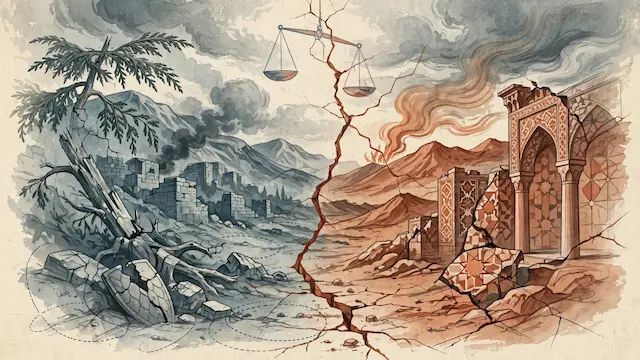
Serious disagreements have emerged within Hezbollah's leadership regarding potential involvement in a new war alongside Iran against the United States and Israel. Political leaders are reportedly concerned about the repercussions for Lebanon and the organization's future, while military figures await directives from Iran's Islamic Revolutionary Guard Corps (IRGC). A Lebanese security source told Iram News that the political wing opposes entering a new conflict, fearing further heavy losses and damage to Hezbollah's influence within Lebanese state institutions. This comes amid growing pressure from the Lebanese government and the international community for the organization's disarmament.
The political leadership's opposition stems from concerns over human casualties, property destruction, displacement, and the difficulty of rebuilding affected areas. They believe Hezbollah would struggle to finance another large-scale military campaign, which would also exacerbate tensions with Lebanese state institutions. The Lebanese government's stance has shifted from demanding the settlement of Hezbollah's arms issue to concentrating military and security functions within official state structures.
Efforts are underway in Lebanon to prevent the country's involvement in a new regional war, with Parliament Speaker Nabih Berri mediating between Hezbollah and state institutions. Berri has reportedly warned Hezbollah against participating in a new war on Iran's side. Additionally, Muhammad Raad, head of the Loyalty to Resistance parliamentary bloc, has indicated a willingness to consider de-escalation during a meeting with a Qatari representative, suggesting a desire from the political wing to avoid war.
However, the military wing's stance remains tied to the IRGC. Changes within Hezbollah following the elimination of Hassan Nasrallah and other senior military leaders have strengthened direct ties between the organization's jihadist council and the IRGC. According to a Reuters investigation from March 2026, IRGC officers were sent to Lebanon to help reorganize Hezbollah's military leadership, shifting to smaller, more autonomous units. These Iranian officers also participated in developing military plans and coordinating actions during previous conflicts.
This close relationship with the IRGC means the military leaders are waiting for Iran's position before deciding on participation in a new confrontation. While preparations are underway, a final decision on entering a war has not been made. The current internal conflict echoes events from March 2026, when Hezbollah launched rockets at Israel without prior knowledge from some political leaders, causing confusion and disagreements. Political leaders fear a repeat of military decisions being made without their input, leaving them to explain the consequences.
Recent diplomatic signals from Iran suggest Tehran is not demanding Hezbollah's intervention in a new war, but the discrepancy between these public statements and the close military ties raises questions about future directives. Muhammad Yousef al-Nour, a researcher and expert on strategic issues, stated that the disagreements reflect differing assessments of war's consequences, with political leaders focusing on Lebanon's costs and the military wing viewing it within a broader regional strategy linked to the IRGC. He warned that the political leaders' inability to prevent military decisions made through coordination channels with Tehran could lead to a crisis of decision-making unity within Hezbollah.
Mentioned
The same event, reported separately by each outlet. Open a few to compare what different newsrooms emphasize — and what they leave out.
Centre 1Other 1

Not the same event — other stories that share this one’s people, places, or theme: background, reactions, and follow-ups.



