
Hezbollah Leadership Divided Over Potential War Involvement
Translated & summarized from Maariv by baba
Hezbollah's leadership is experiencing a significant internal division over joining another war, with the political wing fearing consequences for Lebanon and the organization's influence, while the military wing awaits Iran's lead. This rift echoes past incidents where military decisions were made without full political consensus, leading to controversy. Recent Iranian diplomatic signals suggest Tehran may not be seeking Hezbollah's direct involvement in a future conflict, adding complexity to the decision-making process regarding potential escalation.
The story in 5 lines · by baba
- Hezbollah's political and military leadership are divided over joining another war, fearing different consequences.
- The political wing worries about damage to Lebanon and Hezbollah's influence within the state.
- The military wing sees potential war as part of a regional conflict, awaiting Iran's directive.
- Past decisions, like the March 2026 rocket launch, caused internal controversy and political unawareness.
- Recent Iranian diplomatic messages suggest Tehran may not be seeking Hezbollah's intervention in a future war.
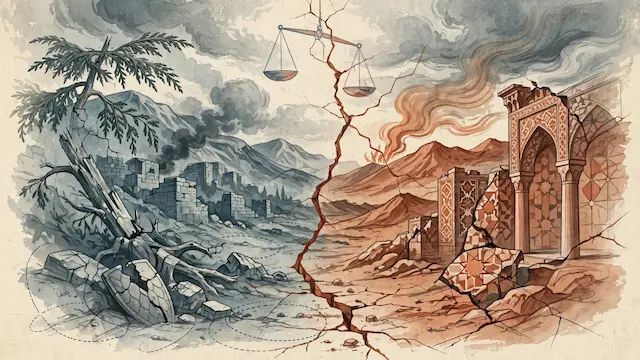
Hezbollah is experiencing an unprecedented internal rift within its leadership concerning the possibility of joining another war, potentially alongside Iran. The political wing of the organization fears the severe consequences such involvement would have on Lebanon and Hezbollah's future influence within Lebanese state institutions. This concern is amplified by growing pressure from the Lebanese government and the international community for the group to disarm.
Conversely, the military wing views participation in a war not as a Lebanese internal issue, but as part of a broader regional conflict and Iran's strategic considerations. Senior military figures are reportedly awaiting the stance of Iran's Revolutionary Guards in the event of further U.S.-Israeli action against Iran. A significant danger highlighted is the potential weakening of political leaders' ability to influence military and strategic decisions, a situation described as more pronounced since the era of Hassan Nasrallah.
The political leadership's apprehension stems from concerns over casualties, property damage, displacement crises, and reconstruction difficulties following previous conflicts. They recognize the organization's struggle to bear the costs of another large-scale military campaign and understand that escalation would deepen the conflict with Lebanese state institutions. This is particularly relevant as the Lebanese government has shifted from demanding arms regulation to seeking to consolidate military and security activities under official state bodies.
This internal division echoes events from March 2026, when Hezbollah launched rockets at Israel following the outbreak of war between the U.S., Israel, and Iran. At that time, some political leaders were reportedly unaware of the decision to attack Israel beforehand, causing confusion and controversy, including with Parliament Speaker Nabih Berri, who had received assurances Hezbollah would not be drawn into a new conflict. The political wing fears a repeat of military decisions being made without their knowledge, while they are left to manage the fallout.
However, recent diplomatic messages from Iran suggest Tehran may not be seeking Hezbollah's intervention in a future war. An Iranian official recently visiting Beirut reportedly clarified that Tehran does not require Hezbollah's involvement. This disparity between diplomatic statements and military ties raises questions about whether Iran's diplomatic pronouncements will align with directives from the Revolutionary Guards to Hezbollah and other regional militias in a conflict scenario. The situation presents Hezbollah with a dilemma over who holds the ultimate authority for decisions that could drag Lebanon into another war, with the political leadership aiming to preserve the organization's standing within Lebanon and the military leadership's considerations tied to the regional conflict and Iran's stance.
The same event, reported separately by each outlet. Open a few to compare what different newsrooms emphasize — and what they leave out.
Centre 1Other 1

Not the same event — other stories that share this one’s people, places, or theme: background, reactions, and follow-ups.




