
Israel's Electoral Threshold: A History of Parties Left Outside the Knesset
Translated & summarized from Ynet by baba
Israel's electoral threshold has varied significantly, impacting party representation in the Knesset. Initially low, it rose over time, notably to 3.25% in 2015, causing parties like Naftali Bennett's The New Right to narrowly miss entry. In the 2022 elections, Meretz, led by Zehavah Galon, also failed to pass the threshold. Future elections may see the threshold rise further, potentially affecting the composition of the Knesset.
The story in 6 lines · by baba
- Israel's electoral threshold has changed many times, preventing parties from entering the Knesset.
- In 1949, the threshold was 0.82%, allowing entry with just 3,670 votes.
- The threshold rose to 1.5% in 1992 and 3.25% in 2015, significantly impacting party success.
- Naftali Bennett's The New Right narrowly missed the Knesset in April 2019 with 3.22% of the vote.
- Meretz, led by Zehavah Galon, failed to enter the Knesset in 2022 with 3.16% of the vote.
- Future elections may require around 173,000 votes to cross the threshold.
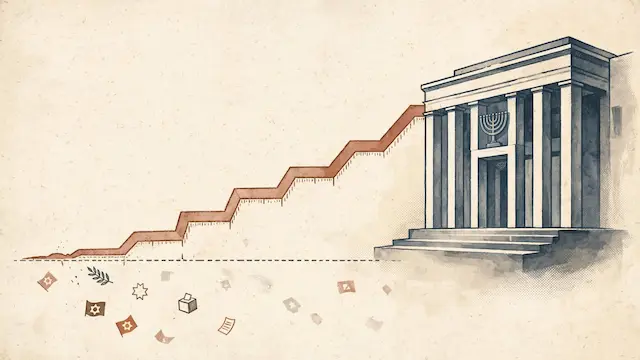
Israel's electoral threshold, the minimum percentage of votes a party needs to enter the Knesset, has fluctuated significantly since the state's inception, leading to numerous parties failing to cross the bar despite garnering substantial votes. In the first Knesset elections in 1949, the threshold was a mere 0.82%, requiring only about 3,670 votes for representation. The "Union of Yemenites in Israel" entered the Knesset with the lowest number of votes ever, 4,399. However, even then, several parties fell short. Over the decades, the threshold rose, reaching 1% by the second Knesset, then remaining at 1% until 1992. A notable incident occurred in 1977 when Plato Sharon, running alone, won two mandates, but the second was transferred to Menachem Begin's Likud party because Sharon was the sole candidate.
The threshold increased to 1.5% for the 13th Knesset elections in 1992, effectively eliminating single-mandate parties. This change saw parties like The Revival, led by Prof. Yuval Neeman, and Pnina Rosenblum's party miss the Knesset by narrow margins in 1999, with Rosenblum falling short by fewer than 5,000 votes. The threshold was raised again to 2% in 2006, a level that would have previously secured parties multiple seats. In 2013, Otzma L'Yisrael, led by Arie Eldad and Michael Ben-Ari, failed to enter the Knesset despite receiving over 66,000 votes, while Shaul Mofaz's Kadima barely passed the threshold.
The most dramatic increase occurred in 2015, when the threshold was set at 3.25%. This change caused Naftali Bennett's The New Right to miss the Knesset by approximately 1,000 votes in the April 2019 elections, despite receiving over 138,000 votes. Eli Yishai's Yachad, Ha'am Itanu also fell short with nearly 3%. In subsequent elections, parties like Itamar Ben-Gvir's Otzma Yehudit and Prof. Yaron Zelekha also failed to cross the threshold.
In the most recent 2022 elections, Meretz, led by Zehavah Galon, garnered 3.16% of the vote but narrowly missed the Knesset, lacking about 4,000 votes. A joint run with the Labor party could have secured them nine mandates. Balad also fell short with 2.91%. The article estimates that for the next elections, the threshold could rise to around 173,000 votes, with the performance of parties like Ofer Winter's Am Israel and Yoaz Hendel's and Yaron Zelekha's HaMeyuladanim-HaKalkalit potentially influencing the outcome.
Mentioned




