
Analysis: How Votes Translate to Knesset Seats and Future Election Scenarios
Translated & summarized from JDN by baba
An analysis by 'HaBro meter' shows how votes for parties below the electoral threshold in Israel's 2022 elections boosted the right-wing bloc's seat count to 64 mandates with less than half the valid votes. Projections for future elections suggest a similar effect, with potentially 394,000 votes going to parties that fail to pass the threshold. This could reduce the current coalition's projected mandates from 58 to 58, or even 57, depending on which smaller parties cross the threshold. Prime Minister Netanyahu may need a significant shift to achieve a 61-mandate majority.
The story in 6 lines · by baba
- In 2022, 48.4% of valid votes yielded 64 Knesset mandates for the right-wing bloc due to 'burned' votes.
- Nearly 290,000 votes for Meretz and Balad in 2022 did not translate into Knesset seats.
- Future elections could see around 394,000 votes (7.75%) going to parties failing to pass the threshold.
- These 'burned' votes are projected to reduce the current coalition's mandate count to 58.
- The success of smaller parties like 'Amcha Israel' or 'HaMiluimnikim/HaKalkalit' could alter the coalition's seat count.
- Prime Minister Netanyahu may need a significant electoral shift to secure a 61-mandate majority.
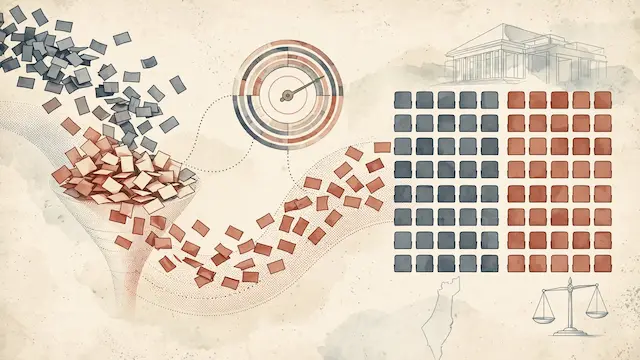
An analysis by 'HaBro meter' of JDN News reveals how a significant portion of votes in the 2022 Israeli elections did not translate into Knesset seats, primarily due to parties falling below the electoral threshold. While the right-wing and religious bloc secured 64 mandates with 48.4% of the valid votes, parties like Meretz and Balad, which together garnered nearly 290,000 votes, failed to pass the threshold, effectively nullifying their representation. This phenomenon, where votes for unsuccessful parties are 'burned' and their weight is redistributed to parties that do pass, boosted the right-wing bloc's seat count. Without these 'burned' votes, the bloc would have received fewer seats. The analysis projects that a similar dynamic could occur in future elections, potentially impacting the coalition-building process. Based on 13 recent polls, the projection for the next election suggests the current coalition parties might receive 58 mandates, with approximately 394,000 votes (7.75% of the total) going to parties failing to pass the threshold. Notably, around 238,000 of these 'burned' votes are estimated to belong to the right-wing and coalition bloc, potentially reducing their mandate count to 58. Conversely, if parties like 'Amcha Israel' or 'HaMiluimnikim/HaKalkalit' were to pass the threshold, the coalition's mandate count could shift, potentially to 60 or even 57 seats, depending on the specific outcome. The article highlights that the number of votes alone is insufficient to determine seat allocation; the distribution of votes among parties and their success in crossing the electoral threshold are crucial. The analysis suggests that Prime Minister Benjamin Netanyahu may need a 'miracle' to secure a 61-mandate majority for his coalition in the upcoming elections.
Mentioned



