
Israel's Supreme Court Bans Real-Time Vote Data Collection by Parties
Translated & summarized from Vesty by baba
Israel's Supreme Court of Justice has banned political parties from collecting and transmitting real-time voter turnout data from polling stations on election day. The ruling, issued five days before the election, overturned a prior authorization by the Central Elections Committee. Justices cited concerns about the potential for misuse and the blurring of lines between election oversight and campaign activities. The decision was welcomed by the "Guardians of Israeli Democracy" organization.
The story in 5 lines · by baba
- Israel's Supreme Court banned parties from collecting real-time voter turnout data on election day.
- The ruling overturned a prior authorization by the Central Elections Committee just five days before the election.
- Justices cited concerns about the potential for misuse and blurring lines between election oversight and campaigning.
- The "Guardians of Israeli Democracy" organization welcomed the court's decision.
- The court ruled that poll workers and party observers cannot digitally count or transmit voter numbers in real-time.
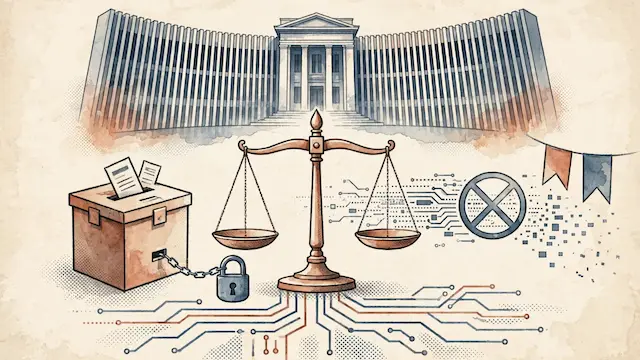
Israel's Supreme Court of Justice (Bagatz) has prohibited political parties from collecting real-time data on voter turnout at polling stations on election day. The ruling, issued on Thursday, October 22, just five days before the election, effectively overturned a previous authorization by the Central Elections Committee. The court decreed that poll workers and party observers are forbidden from digitally counting the number of voters at a specific station and transmitting this information in real-time to their respective parties.
Justices Khaled Kabub and Ruth Ronen delivered the majority opinion, with Justice David Mintz dissenting. The case stemmed from a petition filed by the "Guardians of Israeli Democracy" organization against a decision by Dean Livne, the acting Director General of the Central Elections Committee. During a hearing on October 21, Justices Kabub and Ronen questioned the compatibility of Livne's authorization with a prior court ruling from September 2026. They specifically grilled Attorney Ilan Bombach, representing Likud and the state.
Livne's earlier clarification to Bombach indicated that parties could receive numerical data on turnout but not personal voter information. However, the Supreme Court's final decision banned even this. Justice Kabub highlighted the significant difference between the Central Elections Committee's standard practice of releasing turnout data only four times a day and the proposed continuous, real-time stream of information directly to party headquarters.
Representing the state and the Central Elections Committee, Attorney Avi Milikovsky argued that the data transmission served two purposes: election oversight and voter mobilization. He suggested that if turnout was low at a particular station, a party representative could alert headquarters, which could then investigate potential obstacles like road closures preventing voters from reaching the polls.
The justices were unconvinced. Justice Kabub suggested that parties could instead contact the Central Elections Committee, and Justice Ronen added that they could approach the police. Justice Mintz, in his dissenting opinion, pointed to the political motivation, stating that the clear goal was to encourage voters, allowing parties to boost turnout in areas where they have strong support. Milikovsky conceded that voter mobilization was a legitimate, albeit secondary, objective.
Mentioned
The same event, reported separately by each outlet. Open a few to compare what different newsrooms emphasize — and what they leave out.
Left 1Centre 1Other 1


Not the same event — other stories that share this one’s people, places, or theme: background, reactions, and follow-ups.


