
Israel Debates Eliminating 200 Shekel Bill to Combat Black Market
Translated & summarized from Ynet by baba
Israel's Tax Authority Director Shai Aharonovich has proposed withdrawing the 200 shekel banknote to combat the black market and boost state revenue by an estimated NIS 20-30 billion annually. While some economists support the move as part of a global trend against cash, others, like Or Pourya, Chairman of Pourya Finances, argue it could burden the public, particularly the elderly, and may not effectively eliminate illicit activities without stronger enforcement. Bank of Israel has stated its opposition to the proposal.
The story in 5 lines · by baba
- Tax Authority Director Shai Aharonovich proposed withdrawing the 200 shekel banknote to fight the black market.
- The move could generate NIS 20-30 billion annually for the state, potentially averting tax hikes.
- Some economists see it as a global trend, while others fear it will burden the public.
- Bank of Israel opposes the proposal to eliminate the 200 shekel bill.
- Critics argue for enhanced enforcement rather than inconveniencing the public.
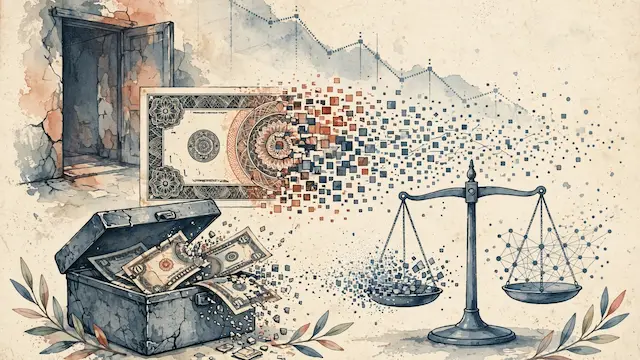
A proposal by Tax Authority Director Shai Aharonovich to withdraw the 200 shekel banknote from circulation has sparked significant debate within Israel's economy. Aharonovich advocates for a complete ban on cash transactions, estimating this could generate NIS 20-30 billion annually for state coffers and potentially avert planned tax hikes. This idea, previously raised in 2024, is believed by market analysts to already be prompting criminals holding large amounts of 200 shekel notes to gradually dispose of them, fearing a sudden, unannounced cancellation.
Economists are divided on the proposal's merits. Ran Sini, Chief Economist at Ultra Finances, views the initiative as part of a global trend to reduce cash usage and combat the black market, which he estimates constitutes 18% of Israel's economic activity. Sini argues that cash transactions hinder tax authority oversight, leading to substantial revenue losses. He believes that reducing cash use could significantly boost state income, providing crucial resources for national needs, especially given heavy defense expenditures and war-related costs. However, he cautions that eliminating the 200 shekel note alone is insufficient and requires effective enforcement, wider adoption of digital payments, and accessibility for those still reliant on cash.
Conversely, Or Pourya, Chairman of Pourya Finances, expresses concern that the proposal, while aiming for a worthy goal, might unduly burden the public. He suggests that artificially accelerating the move away from cash is unnecessary, as it is already a growing global trend. Pourya warns that such a move could disproportionately affect elderly populations and those who depend on cash, potentially leading to increased demand for lower denomination notes or a shift to unregulated digital currencies or foreign cash. He emphasizes that black market activity will not disappear simply by removing a specific banknote and advocates for focusing on enhanced enforcement, improved reporting mechanisms, and more targeted tax base expansion instead of measures that inconvenience the general public.
Mentioned
The same event, reported separately by each outlet. Open a few to compare what different newsrooms emphasize — and what they leave out.
Centre 5Right 4Arab 2Other 8




















Not the same event — other stories that share this one’s people, places, or theme: background, reactions, and follow-ups.
