
Tel-Hai University Opens in Kiryat Shmona, Aiming to Boost Galilee Region
Translated & summarized from Ynet by baba
Tel-Hai University officially opened in Kiryat Shmona and the Galilee, welcoming nearly 5,000 students for the new academic year. The transformation from college to university, backed by a 600 million shekel government investment, aims to revitalize the northern region. While students are drawn to the area's potential and sense of community, they cite high living costs and a lack of quality jobs as major challenges to staying long-term. The university's goal is to significantly increase the percentage of graduates who remain in the Galilee.
The story in 6 lines · by baba
- Tel-Hai University in Kiryat Shmona opened its doors to nearly 5,000 students, marking its transition from college.
- The university's establishment is supported by a 600 million shekel government investment aimed at rehabilitating the northern region.
- A primary goal is to increase the retention rate of graduates in the Galilee from 8% to 30%.
- Students cited high housing costs and a lack of quality employment as significant barriers to remaining in the North.
- Over 70% of the current student body originates from outside the eastern Galilee region.
- The university aims to grow its student population to 8,000 within five years.
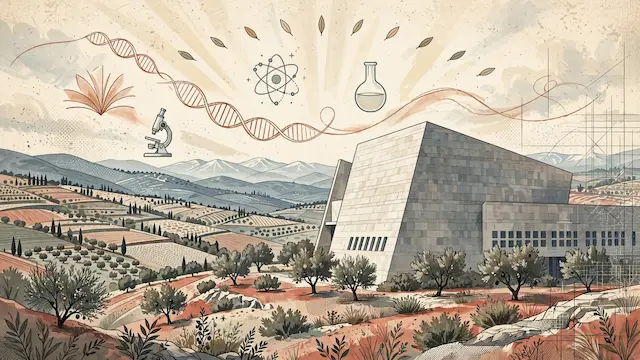
Tel-Hai College, located on the Lebanese border, has officially become Tel-Hai University in Kiryat Shmona and the Galilee, 21 years after a government decision to establish a university in the region. Nearly 5,000 students began the academic year on Tuesday across four faculties. Among them are students like Ariel Ziegler, Dvir Fischer, and Roni Chechkes, who moved north seeking to contribute to the area's recovery and growth. Fischer, a paratrooper who was severely wounded in Gaza in November 2023, had to relocate temporarily due to security concerns but expressed feeling settled in the Galilee, noting the area's revival. Ziegler, who paused her bioinformatics studies after being injured in Gaza and worked at a therapeutic horse farm, is now pursuing psychology, inspired by her own rehabilitation journey. Chechkes, who moved to Kiryat Shmona for psychology studies, has relocated to the nearby moshav of Beit Hilal to be closer to friends, emphasizing the academic prestige of a university degree for future postgraduate studies.
The establishment of the university represents a government investment of approximately 600 million shekels from the "Tnupha" administration for the rehabilitation of the North. University President Prof. Eliezer Shalev described the development as a modern iteration of pioneering and practical Zionism, aiming to build a strategic national and social anchor. A key objective is to increase the number of graduates who remain in the Galilee from the current 8% to 30%, with projections to reach 8,000 students within five years. Over 70% of current students come from outside the eastern Galilee.
Despite their commitment to the North, students like Ziegler, Fischer, and Chechkes identified high housing costs, a lack of medical services, and insufficient quality employment as significant barriers to long-term settlement. They highlighted the need for more rehabilitation centers for disabled veterans and the creation of graduate communities to foster continued residency. Chechkes shared her experience of leaving a startup job for waitressing due to limited opportunities, underscoring that normal employment is crucial for retaining students in the region. While they have "fallen in love with the North" and wish to build their lives there, they acknowledge that future decisions remain uncertain.
Mentioned
The same event, reported separately by each outlet. Open a few to compare what different newsrooms emphasize — and what they leave out.
Centre 2Right 2Other 1





Not the same event — other stories that share this one’s people, places, or theme: background, reactions, and follow-ups.


