
Haifa's Ancient Tel Shikmona National Park Reopens After Extensive Renovation
Translated & summarized from Kipa by baba
Haifa's Tel Shikmona National Park, the city's oldest archaeological site, has reopened after a NIS 3 million, two-year renovation. The site, dating back to the 15th century BCE, now features stabilized walls, new paths, and informational signage. Entry to the park, which preserves 3,500 years of history and Byzantine-era findings, is free of charge.
The story in 5 lines · by baba
- Tel Shikmona National Park in Haifa reopened after a NIS 3 million, two-year renovation.
- The park is Haifa's oldest archaeological site, dating back to the 15th century BCE.
- Renovations included stabilizing walls, paving paths, and adding signage and benches.
- The site preserves 3,500 years of history, including Byzantine-era findings.
- Entry to the newly accessible park is free of charge.
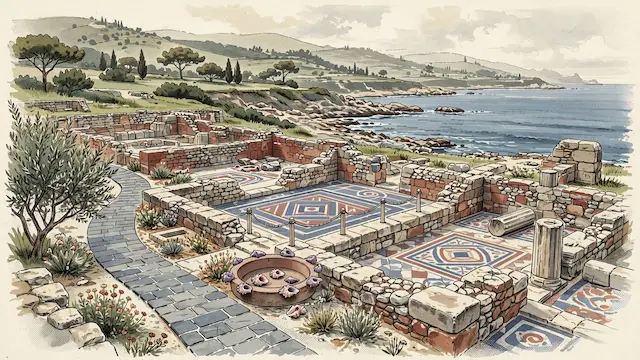
The Tel Shikmona National Park in Haifa has officially reopened to the public following a two-year, NIS 3 million renovation project funded by the Open Spaces Fund. The site, identified as Haifa's oldest archaeological site dating back to the 15th century BCE, preserves 3,500 years of history.
During the development and accessibility project, archaeological excavation walls were stabilized, new pathways were paved, and informational signage and benches were installed for visitor comfort. The park features a multi-layered tell with a central ruin containing a church with impressive mosaics. All work was conducted with extreme care to avoid damaging unexcavated or covered archaeological layers.
Tel Shikmona is believed to be the ancient Byzantine city of Porphyreon, known for its production of purple dye from sea snails from biblical times through the Byzantine era. The national park was declared in 2008, with the marine nature reserve of Yam Shikmona located to its west. The site holds significant findings from the Mediterranean basin.
The recent development and accessibility efforts, funded in 2023 by the Open Spaces Fund and carried out by the National Institute for Sea and Limnological Research, focused on preserving, covering, and making accessible the most important findings. Entry to the park is free and accessible via Hubert Humphrey Street in Haifa for drivers, or on foot from the promenade to the south.
Mentioned


