
Ancient Tel Shikmona National Park Reopens in Haifa After Renovations
Translated & summarized from Makor Rishon by baba
Tel Shikmona National Park in Haifa has reopened after a NIS 3 million, two-year renovation, offering free access to its 3,500-year-old archaeological remains. The site, dating back to the 15th century BCE, was upgraded with new paths and informational signs. The park highlights the ancient purple dye industry and its connection to the sea, allowing visitors to combine history with coastal scenery. The project was a collaboration between multiple Israeli institutions.
The story in 6 lines · by baba
- Tel Shikmona National Park in Haifa reopened after a NIS 3 million, two-year renovation project.
- The archaeological site features over 3,500 years of history, with settlement dating to the 15th century BCE.
- Renovations included new walking paths, informational signs, and preservation of ancient archaeological layers.
- The site was historically a center for producing valuable purple dye from sea snails.
- Entrance to the reopened Tel Shikmona National Park is free for all visitors.
- The project was a collaboration involving the Israel Nature and Parks Authority and the University of Haifa.
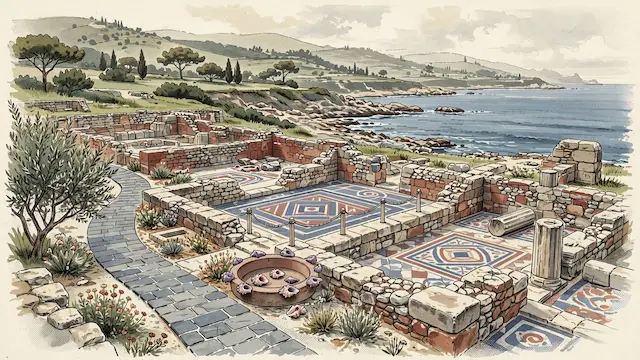
Tel Shikmona National Park, one of Haifa's oldest archaeological sites, has reopened to the public after a two-year, NIS 3 million renovation project. Located on the city's coastline, the park now offers visitors a chance to explore thousands of years of history, enjoy sea views, and learn about a fascinating chapter in the city's past. Entrance to the site is free.
The reopening ceremony was attended by Haifa Mayor Yona Yahav, Director General of the Israel Nature and Parks Authority Raya Shurki, Rector of the University of Haifa Prof. Mona Maron, and Director General of Israel Oceanographic and Limnological Research Alon Zask, among other officials. The renovation included the installation of archaeological excavation walls, new walking paths, and informational signs and benches, all while preserving the site's ancient layers, including those yet to be uncovered.
According to the Israel Nature and Parks Authority, Tel Shikmona is Haifa's oldest archaeological site, with settlement dating back to the 15th century BCE. This multi-layered tell boasts over 3,500 years of history. Excavations have revealed artifacts from various periods, highlighting the region's historical importance. Among the visible remains is an ancient church with impressive mosaics.
A significant part of Tel Shikmona's history is linked to the production of the valuable purple dye, extracted from sea snails and used in antiquity for dyeing fabrics. This industry thrived in the area from the biblical period through the Byzantine era. The site is also identified with the Byzantine settlement "Purpurion," meaning purple, underscoring the ancient inhabitants' connection to the sea.
The park's location is a key advantage, allowing visitors to combine an archaeological visit with a seaside stroll. The newly developed paths facilitate exploration among the findings, with explanatory signs and Mediterranean Sea views. Adjacent to the tell is the Yam Shikmona marine nature reserve, creating a unique blend of nature, landscape, and history.
Tel Shikmona was declared a national park in 2008. In 2023, the adjacent Israel Oceanographic and Limnological Research institute secured funding for the park's preservation and public accessibility. The NIS 3 million project was led by Israel Oceanographic and Limnological Research in collaboration with the Israel Nature and Parks Authority, Haifa Municipality, the Zinman Institute of Archaeology at the University of Haifa, the Israel Antiquities Authority, and local activists. The focus was on preserving archaeological findings, protecting ancient soil layers, and creating a comfortable and accessible visitor space.
Mentioned


