developing· Culture· Updated
Haifa's Tel Shikmona National Park Reopens After Two Years of Renovations
The Tel Shikmona National Park in Haifa has officially reopened to the public following a two-year, NIS 3 million renovation project. Located on the seafront near the National Institute of Oceanography, the park offers free public access to its archaeological site and coastal views. The extensive refurbishment was funded by the Open Spaces Fund and focused on developing accessible walking paths, seating, and informative signage while meticulously preserving the delicate archaeological layers.
3 newsrooms · 1 language · since


What happened
- 01Tel Shikmona National Park in Haifa reopened to the public following a two-year, NIS 3 million renovation project.
- 02The park offers free public access to coastal views and archaeological findings dating back over 3,500 years.
- 03The site was an ancient center for producing prestigious purple dye from sea snails, identified with the city of Porphyreon.
- 04Recent research shows the 8th century BCE complex was used seasonally for olive pressing, textile production, and sheep herding.
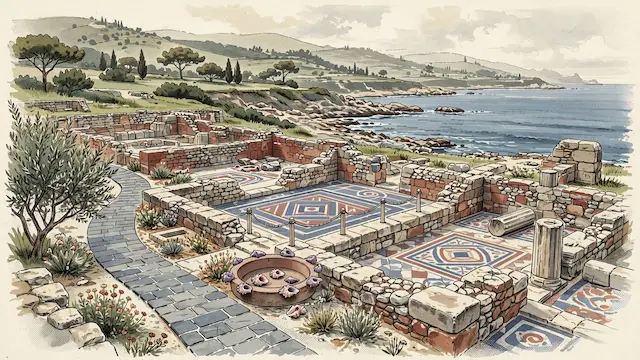
- 05Visitors can view the ruins of a Byzantine church featuring well-preserved, impressive mosaic floors.
- 06The renovation was funded by the Open Spaces Fund to improve accessibility while preserving delicate archaeological layers.
- 07The project was a collaboration between the Israel Nature and Parks Authority, the Haifa Municipality, and several academic and research institutions.
Boasting over 3,500 years of history dating back to the 15th century BCE, Tel Shikmona is recognized as Haifa's oldest archaeological site. In ancient times, the site was identified with the city of Porphyreon, a major Iron Age and Byzantine center for producing prestigious purple dye from sea snails. Recent research published in PLOS ONE reveals that during the 8th century BCE, the complex was a versatile facility used seasonally for multiple industries, including olive pressing, textile production, and sheep herding.
Visitors to the park can now view a small, multi-layered tell and the ruins of a Byzantine church adorned with well-preserved mosaic floors. The development project was a collaborative effort involving the Israel Nature and Parks Authority, the Haifa Municipality, the Israel Oceanographic and Limnological Research Institute, the Israel Antiquities Authority, the archaeology department at the University of Haifa, and local activists.
Summarized by baba from the reports of 3 newsrooms. Updated
Latest report: Kipa. Read Kipa’s originalThe coverage
3 newsrooms on this story
Who covered it
- LeftNone
- CentreNone
- Right2
- HarediNone
- ArabNone
- Other1