
Israel's Tomatoes Face Price Hikes and Flavor Loss Due to Summer Heat
Translated & summarized from Cursorinfo by baba
Israeli consumers are experiencing high prices and poor quality tomatoes due to intense summer heat impacting crop yields and flavor. A representative from the Havivian farm explained that extreme temperatures reduce fruit formation, leading to price increases. While shading nets are used in greenhouses, they also limit sunlight, affecting taste. Consumers may need to wait for the winter harvest, expected around 80 days after planting, for better quality produce.
The story in 5 lines · by baba
- High prices and poor quality of Israeli tomatoes are linked to summer heat and reduced yields.
- Extreme temperatures negatively affect tomato formation, ripening, and flavor.
- Greenhouse cultivation faces challenges with heat, leading to reduced sunlight and taste.
- Reduced crop yields are a primary driver of increased tomato prices in Israel.
- Improved tomato quality is not expected until the winter harvest, approximately 80 days after planting.
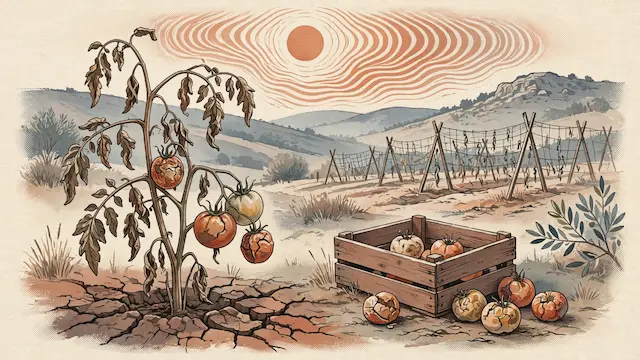
Consumers in Israel are increasingly frustrated by the dual problem of high prices and poor quality tomatoes, which are often watery and lack flavor. The primary cause is attributed to the intense summer heat, which significantly reduces crop yields and impacts fruit development.
Michal Havivian, a representative from the Havivian farm, explained that the extreme summer temperatures negatively affect the formation and ripening of tomatoes, particularly during the critical transition from flower to fruit. This reduction in yield directly leads to increased prices as market supply dwindles. Similar price surges, reaching 15-20 shekels per kilogram, have been observed in previous years, especially before holidays.
The high temperatures also compromise the taste and texture of the tomatoes. While many Israeli tomatoes are grown in greenhouses, technologies effective in cooler European climates struggle with Israel's summer heat. Farmers use shading nets to protect plants from overheating, but this also reduces essential sunlight, resulting in less flavorful, watery produce. This issue affects both standard tomatoes and cherry varieties.
An improvement in tomato quality is not expected immediately with the onset of autumn. The tomatoes currently available were grown during the summer heatwave, meaning their quality is already compromised. Consumers will likely have to wait for the winter harvest, which begins with planting around Rosh Hashanah and takes approximately 80 days to yield mature fruit.

