
Why Israeli Tomatoes Are Tasteless and Expensive
Translated & summarized from N12 by baba
Israeli consumers are facing unusually high prices and poor quality tomatoes due to challenging summer growing conditions. According to Michal Habibian of Hababian Farm, the heat and shading required in greenhouses during summer negatively impact tomato flavor and yield. The current supply reflects these summer-affected plants, and better quality tomatoes are not expected for approximately 80 days, until the winter crop matures.
The story in 5 lines · by baba
- Israeli tomatoes are currently expensive and flavorless due to adverse summer growing conditions.
- The quality is affected by heat and shading in greenhouses, which reduces essential sunlight.
- Scarcity caused by difficult growing conditions drives up the price of tomatoes.
- Even cherry tomatoes are experiencing similar quality and price issues.
- Improved tomato quality and prices are not expected for about 80 days, until the winter crop is ready.
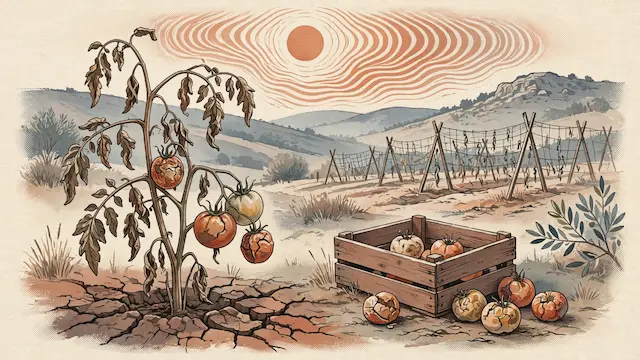
Consumers in Israel are paying more for tomatoes that are both watery and flavorless, a situation that has persisted for months. The problem, according to Michal Habibian of Hababian Farm, begins long before the produce reaches store shelves. The peak season for tomatoes is typically late spring, with the end of summer and the autumn months proving difficult for the fruit. The quality of a tomato is heavily influenced by conditions during its flowering and ripening stages. The tomatoes currently available experienced these crucial periods during the height of summer's heat, resulting in plants that struggled to yield and consequently commanded higher prices due to scarcity.
Most tomatoes grown in Israel are varieties cultivated for greenhouses. While this method suits European climates, it presents challenges in Israel's intense summer heat. To protect the tomatoes, greenhouses are covered with shade nets. Although these nets shield the fruit from extreme temperatures, they also reduce direct sunlight, which is essential for developing flavor. This combination of heat, shading, and suboptimal conditions during fruit formation and ripening leads to the disappointing taste and higher cost.
Even cherry tomatoes, which ripen faster, face similar issues. While they may be ready earlier, they are still subject to the same environmental challenges. The new winter tomato crops are planted around Rosh Hashanah (the Jewish New Year), and it takes approximately 80 days for them to mature. Therefore, the current supply still reflects the difficult summer growing conditions. Consumers will likely have to wait about 80 days from Rosh Hashanah for better quality tomatoes at more reasonable prices, meaning the current situation of expensive and bland tomatoes is expected to continue for some time.

