IDF Prepares Voting Procedures for 26th Knesset Elections Amidst Ongoing Operations
Translated & summarized from Ynet by baba
The IDF is implementing procedures for the 26th Knesset elections to enable soldiers to vote, with polling stations set for October 27. Strict regulations are in place regarding political expression by soldiers, both in uniform and online. Military polling stations will operate throughout election day, with mobile units and early voting available for soldiers in operational zones. The IDF will manage the voting process, but vote counting will be handled by the Central Elections Committee.
The story in 6 lines · by baba
- IDF is establishing voting procedures for soldiers in the 26th Knesset elections on October 27.
- Soldiers are prohibited from expressing political opinions or engaging in political activity within units or on social media.
- Military polling stations will operate from 8 AM to 10 PM, with mobile units and early voting for operational zones.
- Identification at polling stations requires military ID or valid civilian ID with photo.
- Vote counting will be conducted by the Central Elections Committee, not the IDF.
- Election day is not a public holiday for soldiers, and operational activities will continue.
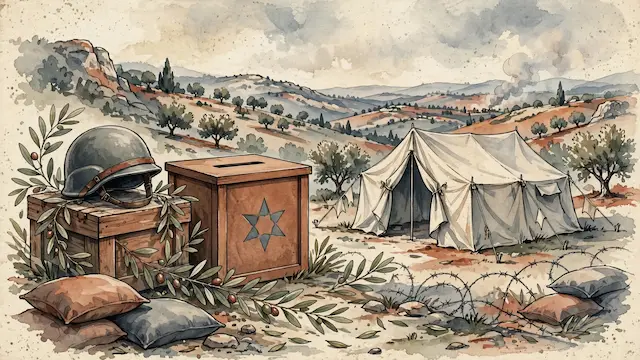
The Israel Defense Forces (IDF) is finalizing logistical arrangements to ensure all conscripted and reserve soldiers can exercise their right to vote in the upcoming 26th Knesset elections. Polling stations will be set up across the country on Tuesday, October 27, with some soldiers potentially encountering them a week earlier. The military is providing guidance on voting procedures, including how soldiers in Lebanon identify themselves, and protocols for those called to operational duty on election day.
For many soldiers, this will be their first time voting. Amidst the current political climate, the IDF is strictly prohibiting soldiers from expressing political opinions, engaging in debates, or attempting to influence others within their units. This ban extends to social media, where soldiers are forbidden from liking, commenting on, sharing, or distributing posts from political parties or candidates. Publicly following candidate or party pages for informational purposes is permitted.
Participation in political gatherings is also restricted. Soldiers may attend as observers only, in civilian attire, and without identifying themselves as military personnel. Reserve soldiers not on active duty are allowed to express political views online, provided they do not wear uniforms or use military insignia. Military polling stations will operate from 8:00 AM to 10:00 PM on election day. Each unit will have an elections officer to provide precise polling station locations and operating times. Both stationary and mobile polling stations will be deployed, with mobile units reaching soldiers in outposts, guarding communities, training, and operational activities. Soldiers can vote at any base where they are stationed on election day, or at a civilian polling station, but voting twice is a criminal offense.
Identification at military polling stations will be handled by a committee of two trained soldiers. Regular soldiers can use their military ID, a valid civilian ID with a photo (ID card, driver's license), or a valid Israeli passport along with proof of military service. Soldiers in hostile territories without identification can use their dog tags or be identified by another soldier, or present a copy of their identification. Hospitalized soldiers will use their military ID or a civilian ID with a "voting confirmation form" from hospital staff. The voting process involves two envelopes: a blue one for the ballot and a white one for personal details, which is later destroyed. Locked ballot boxes will be transferred to the Central Elections Committee at the Knesset for vote counting, with the IDF having no further involvement.
Soldiers serving in operational zones such as Gaza, Syria, and Lebanon, as well as those scheduled for operational activity on election day, can vote early starting October 20. Soldiers can also join political parties, provided they do not identify as soldiers. Senior career soldiers and civilian employees wishing to run for office must cease their military service up to 100 days before the election, while conscripts must defer service up to 100 days prior, and active reservists must cease service up to 30 days before the election. Soldiers may work in neutral roles at civilian polling stations with their commander's permission, but not as committee members, observers, or on behalf of a party. Photography within polling stations is prohibited, similar to civilian elections. Unlike civilian life, election day is not a public holiday for soldiers, and operational activities continue as normal.
The same event, reported separately by each outlet. Open a few to compare what different newsrooms emphasize — and what they leave out.
Centre 1Right 1Other 1



Not the same event — other stories that share this one’s people, places, or theme: background, reactions, and follow-ups.