
Spain's Prime Minister Calls Early Elections Amid Political Crisis
Translated & summarized from Kipa by baba
The story in 6 lines · by baba
- Spain's Prime Minister Pedro Sánchez called for early elections on November 29.
- The elections were triggered by parliament's rejection of the government's housing decrees.
- A recent eviction sparked widespread protests and intensified the housing crisis.
- Sánchez's government has faced challenges with immigration and other policies.
- The prime minister is known for his critical stance against Israel.
- Sánchez is seeking a public mandate against a rising right-wing opposition.
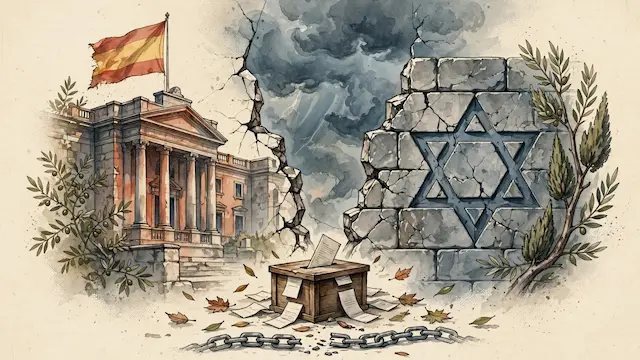
Spanish Prime Minister Pedro Sánchez announced on Sunday the dissolution of parliament and called for early general elections to be held on November 29. The decision follows the parliament's rejection of two housing decrees proposed by his government. Sánchez, who has led a minority government since 2018, has struggled to secure a majority for his legislative agenda amid a strengthening right-wing opposition.
"We are going to work to regain your trust, bring hope, and win again," Sánchez stated after the announcement. The political crisis has been exacerbated in recent weeks by a housing crisis, intensified by the eviction of 87-year-old María del Carmen Abascal from her Madrid home of decades. This incident sparked widespread protests and increased public pressure on the government.
Sánchez's government has also faced criticism regarding its immigration policies and its handling of the crisis in the Spanish enclave of Ceuta. The government's reliance on a complex parliamentary majority has made it difficult to advance its agenda against opposition from various parties. The early elections are expected to be a significant test for Sánchez's continued leadership.
Sánchez is known as one of the prominent European leaders with a strong stance against Israel. His government recognized a Palestinian state and advanced measures related to the war in Gaza, including an arms embargo. He is now asking the public to decide on Spain's political future, urging voters to choose a government that acts in the interest of the majority, rather than a far-right coalition focused on reducing rights for the many to benefit a privileged few.
The same event, reported separately by each outlet. Open a few to compare what different newsrooms emphasize — and what they leave out.
Centre 4Right 4Haredi 1Other 4












Not the same event — other stories that share this one’s people, places, or theme: background, reactions, and follow-ups.

