
Spanish Prime Minister Calls Early Elections Amidst Political Turmoil
Translated & summarized from Makor Rishon by baba
The story in 6 lines · by baba
- Spanish Prime Minister Pedro Sánchez called for early elections on November 29.
- The decision followed a parliamentary defeat on housing decrees.
- Sánchez has been a vocal critic of Israel's war in Gaza.
- Spain recognized a Palestinian state in May 2024.
- The government implemented measures against Israeli arms shipments in September 2025.
- Foreign policy, including relations with Israel, may feature in the election campaign.
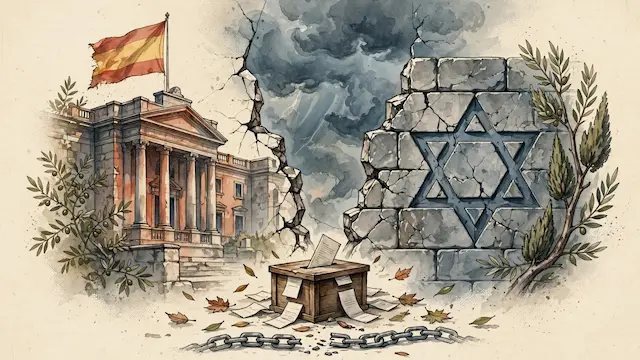
Spanish Prime Minister Pedro Sánchez announced on Monday that general elections will be held on November 29, nine months ahead of schedule. This decision follows a significant parliamentary defeat for his government concerning two key housing decrees, which has hampered its ability to advance key policy initiatives. The upcoming elections are also of particular interest to Israel, as Sánchez has been one of the most vocal European leaders critical of the Israeli government since the outbreak of the war in Gaza.
In May 2024, Spain, alongside Ireland and Norway, officially recognized a Palestinian state. Sánchez stated at the time that this recognition, encompassing Gaza, the West Bank, and East Jerusalem as its capital, was intended to advance a two-state solution. Israel reacted strongly, recalling its ambassador from Madrid for consultations. During this period, Spain intensified its criticism of Israel's conduct in Gaza, urging EU nations to support the International Court of Justice's proceedings against Israeli actions in Rafah and using the term "genocide" to describe events in the Strip. Sánchez simultaneously emphasized that recognizing a Palestinian state was not a move against Israel and condemned Hamas.
In September 2025, Sánchez's government implemented further measures against Israel, including barring ships and planes carrying arms destined for Israel from Spanish ports or airspace, increasing aid to the Palestinian Authority and UNRWA, and prohibiting imports from Israeli settlements. Sánchez stated these measures aimed to increase pressure on the Netanyahu government. This stance made Spain a prominent critic of Israel within the EU, gaining support from segments of the Spanish left, where the Palestinian issue has become a central political theme.
With the early elections, Sánchez will need to defend not only his domestic economic and social policies but also his foreign policy record. While the campaign is expected to focus on the housing crisis, the fragile coalition, and relations with Catalan separatists, foreign policy issues, including relations with Israel, may also resurface. The decision to call early elections was triggered by the Catalan Junts party voting with the People's Party and Vox against the government's housing measures, highlighting Sánchez's reliance on small parliamentary partners and regional parties. Sánchez stated Spain needs a "broader progressive majority" and will seek to regain this mandate from the public. The November 29 elections will determine whether his recent domestic and international course receives renewed public backing.
Mentioned
The same event, reported separately by each outlet. Open a few to compare what different newsrooms emphasize — and what they leave out.
Centre 4Right 4Haredi 1Other 4












Not the same event — other stories that share this one’s people, places, or theme: background, reactions, and follow-ups.