
Spanish Prime Minister Calls Early Election After Housing Bill Defeat
Translated & summarized from JDN by baba
The story in 6 lines · by baba
- Spanish PM Pedro Sánchez called early elections for November 29.
- The election follows parliament's rejection of his housing decrees.
- Sánchez's party trails in polls, risking a far-right coalition.
- A far-right government would be Spain's first since Franco.
- Sánchez has faced challenges with coalition partners and corruption.
- Spain has taken a critical stance against Israel under Sánchez.
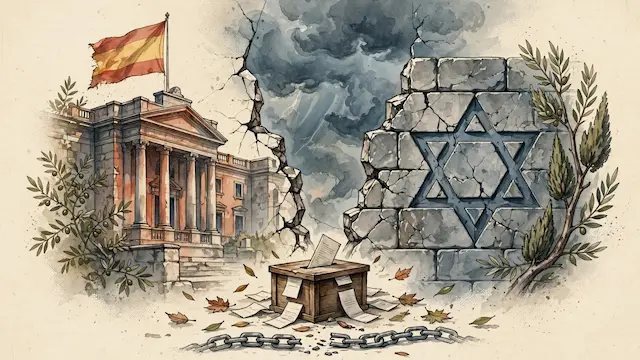
Spanish Prime Minister Pedro Sánchez announced on Monday that early general elections will be held on November 29. The decision follows the parliament's rejection last week of his government's key housing decrees, which occurred amid widespread protests over the issue. "We must renew the public's support," Sánchez stated in a morning address, expressing his desire for a "much larger progressive majority in parliament" to overcome vested interests and continue transforming Spain. He acknowledged missteps and unfulfilled promises, admitting that "part of this social majority is not satisfied today."
The snap election carries significant risks for Sánchez's Socialist party, which is trailing in opinion polls. Current surveys suggest a coalition led by the conservative People's Party, supported by the far-right Vox party, is the most likely outcome. Such a scenario would bring a far-right party into Spain's central government for the first time since democracy was restored after the death of dictator Francisco Franco. However, Sánchez's housing proposals have garnered support, despite their recent parliamentary defeat by right-wing lawmakers, which has prompted plans for further public demonstrations.
Sánchez came to power eight years ago after leading the ouster of the previous Prime Minister, Mariano Rajoy, amid corruption scandals within his party. Although he never secured a majority to govern alone, Sánchez has held power for three consecutive terms over eight years, relying on fragile coalitions that included parties from the far-left to separatist groups. In 2023, he won a second four-year term despite significant losses in local and regional elections, achieved by promising a controversial amnesty for Catalan independence leaders in exchange for their support, a move many voters still view as a betrayal of Spanish unity.
During his current term, coalition partner divisions have hindered significant legislative action, and his government has failed to pass a budget since 2023, even as Spain's economy performs well among developed nations. In the past year, senior figures in the Socialist party have faced corruption suspicions, and party support has hovered around 26%-31% throughout his tenure.
Internationally, Sánchez has championed progressive stances, including support for a Palestinian state, defense of international institutions, and opposition to "tech oligarchs." His refusal to meet a US-led demand to increase defense spending to 5% of GDP, coupled with his overtures to China, created friction with President Trump and European leaders. Sánchez has been one of Europe's sharpest critics of Israel, with Spain recognizing a Palestinian state in May 2024 and his government implementing further measures against Israel during the recent war, including restrictions on arms trade. A government led by the People's Party with Vox support is expected to be far more favorable to Israel.
The same event, reported separately by each outlet. Open a few to compare what different newsrooms emphasize — and what they leave out.
Centre 4Right 4Haredi 1Other 4












Not the same event — other stories that share this one’s people, places, or theme: background, reactions, and follow-ups.
