
Israel Disposes of Millions in Unused Medications Amidst Public Shortages
Translated & summarized from Cursorinfo by baba
Israel discards over 700 million shekels in unused medications annually while many citizens cannot afford treatment. A non-profit "Haverim Le'Refua" redirects usable drugs to the needy, contrasting with the automatic disposal of medications collected by HMOs.
The story in 5 lines · by baba
- Israel discards over 700 million shekels in unused medications annually.
- Thousands of Israelis cannot afford necessary medical treatments.
- HMOs automatically dispose of collected medications.
- Haverim Le'Refua redirects usable drugs to low-income families.
- The Ministry of Health is seeking ways to reduce medical waste.
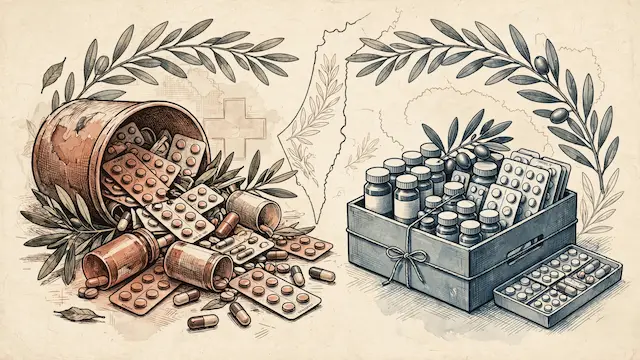
Israel annually disposes of over 700 million shekels worth of medications, a stark contrast to thousands of citizens struggling to afford necessary treatments due to financial hardship. The business newspaper "Calcalist" highlighted this paradoxical situation where tons of usable, unexpired drugs are discarded.
Two primary systems govern the fate of surplus medications. When citizens deposit unused drugs into containers provided by health maintenance organizations (HMOs), these medications are automatically sent for costly disposal. In contrast, the non-profit organization "Haverim Le'Refua" operates collection points in medical facilities and pharmacies. Volunteers at these points meticulously sort the donated drugs, enabling high-quality medications to be redirected to low-income families.
The "Haverim Le'Refua" organization, legally recognized in 2016, manages a specialized distribution center. Here, volunteer pharmacists rigorously inspect each donated medication for safety and intact packaging. After passing this stringent quality control, the drugs are distributed to those in need through official social welfare services. Beyond common medications like antibiotics and ointments, the organization assists patients with serious illnesses in obtaining rare, expensive drugs not covered by the national health basket.
The Ministry of Health cites strict quality control as the reason for its policies, emphasizing the difficulty in verifying home storage conditions compared to the traceable pharmaceutical supply chain. However, the ministry acknowledges the significant issue of medical waste and is exploring solutions. Potential measures include optimizing prescription durations, enhancing treatment monitoring, and mandating pharmacist consultations for patients. Previously, "Cursor" reported on the Ministry of Health's urgent recall of a dangerous medication.



