
Israel Discards Hundreds of Millions in Medications Annually
Translated & summarized from Vesty by baba
Israel discards over 700 million shekels in medications annually, with many still-usable drugs being destroyed due to collection methods. A non-profit organization, Haverim Le'Refua, attempts to redistribute these medications to those in need, but faces limitations imposed by the Ministry of Health's quality control concerns.
The story in 5 lines · by baba
- Israel discards over 700 million shekels in medications annually.
- Usable drugs returned to health funds are automatically destroyed.
- Haverim Le'Refua redistributes medications to needy families.
- Ministry of Health cites quality control for strict disposal rules.
- New measures aim to reduce medication surplus and waste.
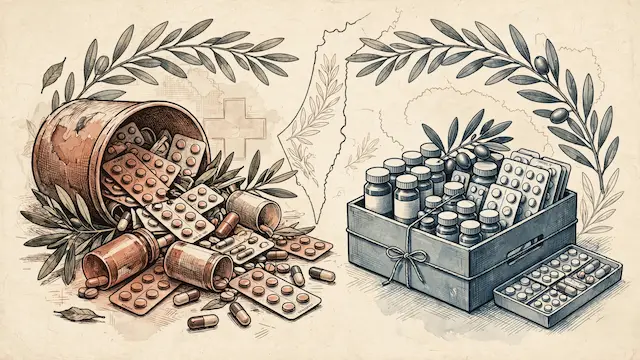
Israel discards over 700 million shekels worth of medications each year, according to the economic publication Calcalist. Many of these still-usable drugs could potentially help patients who cannot afford treatment. However, medications with valid expiration dates are automatically destroyed if they are returned to health fund (Kupat Holim) collection points.
There are two main channels for collecting unused medications in Israel. One is through health fund containers, where drugs are automatically disposed of. The other is through collection points operated by the non-profit organization Haverim Le'Refua, located in institutions and Super-Pharm branches. Haverim Le'Refua, whose activities were regulated by law in 2016, checks these returned medications and distributes them to families unable to afford them. The organization is permitted to receive donations from individuals and companies but cannot collect drugs from health fund containers.
This system results in the costly disposal of viable medications, reduced aid for those in need, and environmental damage. Haverim Le'Refua operates a sorting and distribution center, functioning like a pharmacy, where volunteer pharmacists verify the safety and usability of donated drugs according to Ministry of Health regulations. These medications are then provided to families identified by municipal social services as requiring assistance, with thousands of families receiving aid monthly.
The organization focuses on two areas: collecting and distributing common medications like ointments and antibiotics, and assisting patients with severe or rare diseases in obtaining expensive drugs not covered by the national health basket. Baruch Lieberman, Director General of Haverim Le'Refua, stated that the organization aims to ensure access to treatment regardless of cost, noting that the value of discarded medications exceeds the annual budget increase for the drug basket and that the funds needed for chronic patients are significantly less.
The Ministry of Health cites the need for quality control as the reason for the strict regulations, explaining that the official supply chain tracks drugs from production to pharmacy. They argue that tracking the storage conditions of returned home-use medications is difficult. While acknowledging the problem of widespread drug disposal, the ministry is promoting measures to reduce surplus, such as better treatment monitoring, shorter prescription periods, and pharmacist consultations to optimize dispensed quantities.



