
Fuel Prices Hit Record High in Israel Amid Global Tensions
Translated & summarized from Maariv by baba
Gasoline prices in Israel have reached a record high of 8.27 shekels per liter due to global energy market instability and refinery damage. Experts warn of wider economic impacts and potential political maneuvering around excise tax policies.
The story in 5 lines · by baba
- Fuel prices in Israel reach historic high of 8.27 shekels per liter.
- Global tensions and refinery damage drive up energy costs.
- Experts warn of increased cost of living and broader economic impact.
- Finance Minister may consider further excise tax reductions.
- Political factors may influence government response to price hikes.
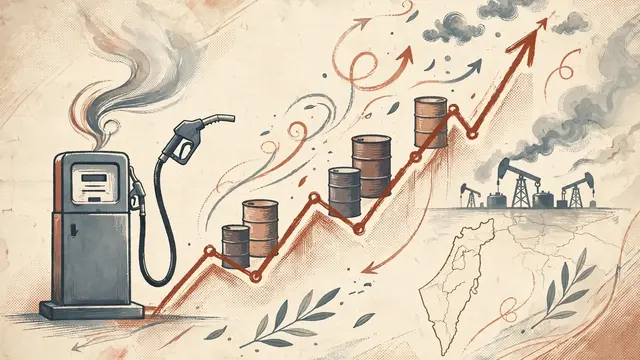
The price of gasoline in Israel has reached a historic high of 8.27 shekels per liter, an increase of 52 agorot, effective October 1, 2026. This surge is attributed to global energy market volatility, including tensions around the Strait of Hormuz and damage to oil refineries in Russia. The Ministry of Energy and Infrastructure announced the updated prices, noting that the maximum price for a liter of 95-octane unleaded gasoline at self-service stations will not exceed this new record.
Liat Ron, speaking on 103FM radio, explained that several international events have driven crude oil prices close to $100 per barrel. These include geopolitical issues in the Strait of Hormuz and the Bab-el-Mandeb strait in Yemen, as well as drone attacks impacting Russian refineries, hindering their production capacity.
Ron warned that the rising fuel costs could have broader implications for the cost of living in Israel, as increased energy prices impact all sectors of the economy. She recalled a previous reduction in fuel excise tax that lowered prices, and expressed uncertainty about whether Finance Minister Bezalel Smotrich would attempt another tax cut.
While acknowledging the global formula dictates price changes, Ron also highlighted the political dimension. She suggested that the price increase could be politically inconvenient for the Likud party and that Smotrich might leverage the situation to create conflict with the Attorney General, who could potentially block further excise tax reductions. Ron concluded that ultimately, political considerations are at play, contributing to the economic strain on the public.
Mentioned











