
Autumn Arrives in Israel With Cooler Temperatures and Scattered Showers
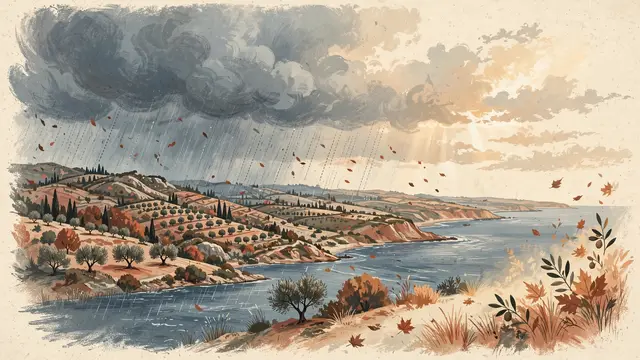
Israel is experiencing a noticeable shift in weather as autumn begins, marked by a gradual decrease in temperatures and the arrival of scattered rain showers. Following a prolonged period of unseasonably warm weather, the coming days will see cooler conditions, particularly in the mornings and evenings, before stabilizing towards the weekend.
On Tuesday, temperatures will drop noticeably, especially in the central and southern regions, feeling cooler than usual for late September. Partial cloud cover is expected nationwide, with a chance of light, localized rain in the north and along the coastal plain. These are not significant rain events but signal a clear transition to autumn.
Wednesday will bring another temperature drop and continued cloudiness. Localized rain is likely to spread from the north and coastal plain to more inland and southern areas. The air will feel distinctly cooler, with evening and nighttime temperatures dropping further, especially in northern and elevated regions.
As Sukkot eve approaches on Thursday, the weather is expected to be pleasant and cool across most of the country, with partly cloudy skies. Light, localized rain may persist in the north and along the coast, so those preparing for the holiday or sitting in their sukkahs should be aware of potential light drizzles.
Friday will see a gradual stabilization, with partly cloudy to clear skies and temperatures remaining slightly below average. While the chance of rain diminishes, light drizzles are still possible, mainly in the north. The day will become progressively clearer and more comfortable.
By Saturday, the weather is forecast to become stable and fair, with decreasing cloud cover and rising temperatures. This moderate increase will bring temperatures closer to the seasonal average, signaling a temporary end to the cooler spell.
The same event, reported separately by each outlet. Open a few to compare what different newsrooms emphasize — and what they leave out.







Not the same event — other stories that share this one’s people, places, or theme: background, reactions, and follow-ups.


Ask About This Article
Duki reads it, and every newsroom on the same story, then answers with sources.
How the headlines differ
News Plus
One Event. Different Headlines.
See the words each newsroom chose, with the original headline beside the translation.