Israel Reports Suspected Ebola Case in Traveler Returning From Congo
Translated & summarized from Panet by baba
Israel's Ministry of Health is investigating a suspected Ebola case in a traveler returning from the Democratic Republic of Congo. The individual is hospitalized in isolation, and test results are pending.
The story in 5 lines · by baba
- Suspected Ebola case identified in traveler from Democratic Republic of Congo.
- Patient hospitalized in isolation at Hadassah Ein Kerem Medical Center.
- Ministry of Health conducting epidemiological investigation and contact tracing.
- Ebola transmission is not airborne, requires direct contact with bodily fluids.
- Public advised to avoid travel to affected regions and report symptoms upon return.
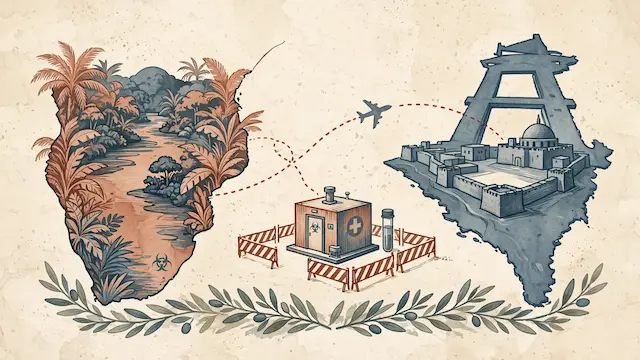
Israel's Ministry of Health announced on Tuesday that it is investigating a suspected case of Ebola in an individual who recently returned from the Democratic Republic of Congo. The person arrived in Israel several days ago and has since developed a fever.
Currently, the case is only considered a suspicion, and further tests are underway, with results expected in the coming days. The Ministry stated that the patient will be treated in isolation at Hadassah Ein Kerem Medical Center, designated for handling high-risk infectious diseases, following professional protocols for such conditions.
The Ministry of Health has conducted an epidemiological investigation to identify individuals who may have come into contact with the suspected patient. Those who do not receive instructions from the Ministry are not required to take any action at this time. The Ministry emphasized that Ebola is not airborne and spreads through direct contact with an infected person's bodily fluids or blood.
In response to the ongoing Ebola outbreak in the Democratic Republic of Congo, the Ministry of Health has been monitoring the situation and preparing the healthcare system. This includes issuing professional guidelines to medical teams and hospitals, procuring necessary protective equipment, and establishing early detection mechanisms for travelers returning from affected areas, along with a laboratory detection system.
The Ministry urged the public to avoid non-essential travel to regions with active Ebola cases, particularly the Democratic Republic of Congo. Travelers returning from these areas who develop a fever or unusual symptoms within 21 days of their visit are advised to self-isolate, avoid contact with others, and call the Ministry's hotline, specifying their travel history to an Ebola-affected region.
Mentioned
The same event, reported separately by each outlet. Open a few to compare what different newsrooms emphasize — and what they leave out.
Centre 5Right 4Haredi 2Arab 3Other 4